

Why Your Gaming PC AIO Cooler Stops Working
An AIO liquid cooler plays an important role in keeping a gaming PC processor at safe operating temperatures, especially in systems with high-performance CPUs. When the cooler stops working correctly, CPU temperatures can rise quickly even when the radiator fans appear to be spinning normally.
A failing AIO cooler does not always mean the entire cooling system has suddenly stopped. Problems can develop with the pump, power connection, coolant circulation, radiator airflow, or internal components of the cooler. In some cases, the first sign is unusually high CPU temperatures, unexpected thermal throttling, or a gaming PC that begins shutting down under load.
Understanding what can cause an AIO cooler to stop working can help separate a cooling-system failure from other gaming PC problems. In this guide, we’ll look at the most common AIO cooler issues, what happens when coolant is no longer circulating correctly, and how these problems are professionally diagnosed.
Table of Contents
Signs Your Gaming PC AIO Is Not Cooling Properly
An AIO cooler can begin failing before the gaming PC becomes completely unusable. In many cases, the first indication is a change in cooling behavior rather than an obvious pump failure. Paying attention to how temperatures, noise, and performance change can help narrow down whether the liquid cooler is involved.
One common sign is a CPU temperature that rises unusually fast after launching a game or other demanding application. The system may idle at a reasonable temperature but climb rapidly under load because the cooler is no longer transferring heat efficiently from the CPU to the radiator.
Other warning signs can include unusually high idle temperatures, sudden thermal throttling, inconsistent CPU temperatures, unexpected shutdowns under load, or a pump that is producing new grinding, buzzing, or rattling noises. In some cases, the pump may become unusually quiet because it is no longer operating at all.
Another important clue is the temperature of the AIO tubing and radiator. When coolant is circulating normally, heat should be transferred away from the CPU block toward the radiator. If the CPU becomes extremely hot while the radiator remains relatively cool, restricted or failed coolant circulation may be involved.
However, these signs should not automatically be treated as proof that the AIO needs replacement. Incorrect pump settings, a loose power connection, poor contact between the CPU and cold plate, radiator airflow problems, or other hardware issues can create similar behavior. Proper testing is important before replacing the cooler.
Can the AIO Pump Be Running While the CPU Is Still Too Hot?
Yes. One of the more difficult AIO problems to diagnose is a cooler that reports pump activity but still cannot control CPU temperatures. Seeing a pump RPM value in the BIOS or monitoring software confirms that the motherboard is receiving a speed signal, but it does not prove that coolant is circulating effectively through the entire loop.
A partially restricted cold plate, reduced coolant flow, trapped air, or internal wear can allow the pump to continue operating while cooling performance gradually deteriorates. This can create a situation where the AIO appears functional during a basic inspection but CPU temperatures rise rapidly during gaming or other demanding workloads.
The physical installation of the CPU block also needs to be considered. If mounting pressure is uneven or the cold plate is not making proper contact with the CPU, heat transfer can be poor even when coolant circulation is normal. Thermal interface problems can produce similar behavior, which is why replacing the AIO immediately is not always the correct first step.
Radiator performance matters as well. Restricted airflow, excessive dust buildup, incorrectly configured fans, or poor radiator placement can prevent heat from being released efficiently. In these cases, the pump may be functioning normally while another part of the cooling system is limiting performance.
Professional diagnostics therefore look at the AIO as a complete cooling system rather than relying on a single RPM reading. Pump operation, CPU temperature behavior, radiator heat transfer, fan operation, mounting pressure, and coolant circulation all help determine where the actual failure is occurring.
Can Air Bubbles Stop an AIO Cooler From Working Properly?
Air inside an AIO does not automatically mean the cooler is defective. Closed-loop liquid coolers normally contain a small amount of air, and the amount can become more noticeable as the cooler ages. The important factor is where that air collects inside the cooling loop.
If air reaches the pump chamber, the pump may have difficulty moving coolant consistently. This can produce gurgling, bubbling, rattling, or intermittent changes in cooling performance. In more severe cases, the CPU temperature may fluctuate because coolant circulation is no longer stable.
Radiator position can influence where air settles. Ideally, the pump should not become the highest point where air naturally accumulates. The correct orientation depends on the case, radiator location, tubing, and AIO design, so installation should be evaluated as a complete system rather than by applying one mounting rule to every gaming PC.
Air-related symptoms can also be mistaken for mechanical pump failure. A noisy pump does not necessarily mean it needs immediate replacement, just as a quiet pump does not guarantee that coolant is circulating correctly. Comparing pump behavior with CPU temperatures and radiator heat transfer provides a much clearer picture.
When an older AIO repeatedly develops circulation problems, abnormal pump noise, or unstable cooling despite correct installation, the issue may be internal to the sealed loop. Because most consumer AIO coolers are not designed for routine draining, refilling, or internal servicing, replacement may eventually be more appropriate than attempting to open the unit.
AIO Cooler Failure or Thermal Paste Problem?
High CPU temperatures do not always mean the AIO cooler has failed. Poor thermal contact between the CPU and the cooler's cold plate can produce many of the same symptoms, including high idle temperatures, rapid temperature increases under load, thermal throttling, and unexpected shutdowns.
Thermal paste fills microscopic gaps between the CPU heat spreader and the cooler's cold plate so heat can transfer efficiently between the two surfaces. If the paste has degraded, was applied incorrectly, or the cooler was removed and reinstalled without properly replacing the thermal interface material, cooling performance can suffer even when the AIO pump is circulating coolant normally.
Mounting pressure is equally important. A cold plate that is unevenly tightened or not seated correctly against the CPU can create poor thermal contact. This is especially important after a CPU upgrade, motherboard replacement, cooler installation, or other work that required removing the AIO block.
Technicians can distinguish these problems by looking at the complete thermal behavior of the system. A CPU that becomes extremely hot while coolant circulation and radiator performance appear normal may point toward a contact or thermal-interface problem. By comparison, a hot CPU combined with poor heat transfer through the loop can indicate a circulation or pump-related problem.
Thermal paste should therefore be evaluated as part of the diagnosis rather than replaced automatically whenever a gaming PC runs hot. Prime Tech Support's guide to changing thermal paste in a gaming PC explains when replacement is appropriate and why the thermal interface matters for CPU cooling.
Why Is the CPU Overheating if the AIO Radiator Fans Are Spinning?
Seeing the radiator fans spinning can make an AIO cooler appear to be working normally, but fan operation only confirms that air is moving through the radiator. The fans do not circulate coolant between the CPU block and radiator, so they can continue running even when the pump has stopped or coolant flow has become restricted.
This is why a gaming PC can have visibly operating radiator fans while CPU temperatures continue climbing. If heat is not being carried away from the CPU block by the liquid inside the loop, there may be very little heat reaching the radiator for the fans to remove.
The opposite situation is also possible. The pump may be circulating coolant correctly, but poor radiator airflow can prevent the system from releasing heat efficiently. Dust buildup, blocked intake or exhaust paths, incorrect fan direction, low fan speeds, or failing radiator fans can all reduce cooling performance.
Fan operation should therefore be evaluated together with pump RPM, CPU temperature behavior, radiator temperature, airflow, and coolant circulation. Looking at only one component can lead to replacing an AIO that is still functional or overlooking a pump that is no longer moving coolant effectively.
If the radiator fans themselves are not spinning, the troubleshooting path changes because the problem may involve fan headers, controllers, power connections, or motherboard control. Similar fan-control problems are covered in our gaming PC case fans not spinning guide.
Why Is the CPU Overheating if the AIO Radiator Fans Are Spinning?
Seeing the radiator fans spinning can make an AIO cooler appear to be working normally, but fan operation only confirms that air is moving through the radiator. The fans do not circulate coolant between the CPU block and radiator, so they can continue running even when the pump has stopped or coolant flow has become restricted.
This is why a gaming PC can have visibly operating radiator fans while CPU temperatures continue climbing. If heat is not being carried away from the CPU block by the liquid inside the loop, there may be very little heat reaching the radiator for the fans to remove.
The opposite situation is also possible. The pump may be circulating coolant correctly, but poor radiator airflow can prevent the system from releasing heat efficiently. Dust buildup, blocked intake or exhaust paths, incorrect fan direction, low fan speeds, or failing radiator fans can all reduce cooling performance.
Fan operation should therefore be evaluated together with pump RPM, CPU temperature behavior, radiator temperature, airflow, and coolant circulation. Looking at only one component can lead to replacing an AIO that is still functional or overlooking a pump that is no longer moving coolant effectively.
If the radiator fans themselves are not spinning, the troubleshooting path changes because the problem may involve fan headers, controllers, power connections, or motherboard control. Similar fan-control problems are covered in our gaming PC case fans not spinning guide.
When Does an AIO Cooler Need to Be Replaced?
An AIO cooler does not need to be replaced simply because CPU temperatures are higher than expected. Before replacing the unit, the pump connection, BIOS configuration, radiator airflow, fan operation, mounting pressure, and thermal interface should be checked to rule out problems that can make a functional cooler appear defective.
Replacement becomes more likely when testing confirms that the pump is no longer operating, the pump repeatedly fails to start, or coolant circulation remains inadequate despite correct power and configuration. Persistent mechanical noises from the pump combined with poor cooling performance can also indicate internal wear.
An internal restriction is another reason replacement may be necessary. If the pump reports normal operation but heat is not transferring effectively through the loop, the cooler may have developed a blockage or another internal circulation problem that cannot be corrected through normal external troubleshooting.
Physical problems such as coolant leakage, damaged tubing, or deterioration around fittings should also be taken seriously. A leaking liquid cooler should not continue operating inside a gaming PC because coolant can reach the motherboard, graphics card, power connections, or other components.
Because most consumer AIO coolers are sealed systems, internal pump or circulation failures are generally not handled the same way as a serviceable custom liquid-cooling loop. Once an internal failure has been confirmed, replacing the AIO with a properly sized and correctly installed cooling solution is often the practical approach.
Not sure whether the AIO or another component is causing the overheating? Prime Tech Support can diagnose the cooling system, motherboard connections, CPU temperatures, and related hardware before unnecessary parts are replaced. Visit our Gaming PC repair services to learn more.
How Professionals Diagnose AIO Cooling Problems
Professional AIO diagnostics begin by confirming the actual thermal behavior of the gaming PC rather than assuming the cooler is defective because the CPU is running hot. CPU temperatures can be compared at idle and under controlled load while pump speed, fan operation, and motherboard readings are monitored.
The pump's electrical connections are then checked to confirm that it is receiving the correct power and that the motherboard header is configured appropriately. If the AIO uses SATA power, USB communication, or a separate controller, those connections may also need to be inspected.
Technicians can also evaluate whether heat is moving through the cooling loop. The temperature behavior around the CPU block, tubing, and radiator can help determine whether coolant is circulating and whether the radiator is actually receiving heat from the processor.
If circulation appears normal, attention can shift to mounting pressure, cold-plate contact, thermal paste, radiator airflow, and fan configuration. This helps separate an internal AIO failure from an installation or airflow problem that may be corrected without replacing the entire cooler.
The rest of the gaming PC also matters during diagnosis. Unusual CPU voltage, incorrect BIOS settings, motherboard control problems, or other hardware conditions can affect temperatures and cooling behavior. Evaluating the complete system reduces the chance of replacing an AIO when the underlying problem is somewhere else.
The goal is to identify whether the failure comes from the pump, coolant circulation, radiator airflow, installation, electrical connection, or another component before deciding what needs to be repaired or replaced.
Can You Keep Using a Gaming PC With a Failing AIO?
Continuing to use a gaming PC with a suspected AIO failure is not recommended if the CPU is repeatedly reaching excessive temperatures. Modern processors have thermal-protection mechanisms that can reduce performance or shut the system down, but those protections should not be treated as a substitute for a properly functioning cooling system.
If the pump has stopped circulating coolant, CPU temperature can rise very quickly when a game, benchmark, rendering application, or other demanding workload begins. The computer may initially appear normal on the desktop and then throttle, freeze, restart, or shut down once processor load increases.
Repeated thermal shutdowns are also a sign that further testing under heavy load is unnecessary until the cooling problem has been identified. Instead of repeatedly launching games or stress-testing the system, the AIO connections, pump operation, radiator airflow, and CPU-block installation should be inspected first.
If the gaming PC is restarting but CPU temperatures remain normal, the AIO may not be the cause. Power delivery, memory instability, GPU problems, motherboard faults, drivers, and other hardware or software conditions can also cause unexpected restarts. This is why temperature data and system behavior should be evaluated together before connecting every shutdown or restart to the liquid cooler.
Once an AIO failure is confirmed, the cooling problem should be corrected before returning the system to sustained gaming or other CPU-intensive workloads.
How to Reduce Future AIO Cooling Problems
An AIO cooler is a sealed component, so there is limited internal maintenance that should be performed by the user. However, keeping the rest of the cooling system in good condition can reduce unnecessary thermal stress and make developing problems easier to identify.
Radiator and fan areas should be kept reasonably free of dust so airflow is not restricted. Case intake and exhaust paths also need adequate clearance, especially in high-performance gaming PCs where the CPU and graphics card can produce substantial heat during extended gaming sessions.
It is also useful to occasionally monitor normal CPU temperatures and pump speed. Knowing how the system behaves when it is operating correctly makes unusual changes easier to recognize. A sudden increase in temperatures, new pump noise, or an unexpected change in RPM can justify further inspection before the problem becomes severe.
After moving the gaming PC, replacing the motherboard, upgrading the CPU, or performing work around the cooler, AIO connections and mounting should be checked. Cables can be disturbed during hardware work, and changes to BIOS settings can affect how motherboard headers control connected cooling devices.
Most importantly, an AIO should not be opened simply as routine maintenance. Consumer closed-loop coolers are generally designed to remain sealed. If testing eventually confirms an internal pump, circulation, or leakage problem, replacing the affected cooler is usually safer than attempting to modify the sealed loop.
Final Thoughts on Gaming PC AIO Cooler Problems
An AIO cooler can stop cooling properly for several reasons, including pump failure, incorrect power or motherboard connections, trapped air, restricted coolant circulation, radiator airflow problems, poor mounting pressure, or an issue with the thermal interface between the CPU and cold plate.
The key is not to assume that high CPU temperatures automatically mean the entire AIO needs replacement. Pump RPM, CPU temperature behavior, coolant circulation, radiator heat transfer, fan operation, BIOS configuration, and the physical installation of the cooler should be evaluated together before determining the cause.
If your gaming PC is experiencing rapidly rising CPU temperatures, thermal throttling, unexplained shutdowns, abnormal AIO noises, or suspected pump failure, avoiding repeated heavy workloads until the cooling system is checked can prevent unnecessary thermal stress.
Having trouble with your gaming PC's AIO cooler? Prime Tech Support can diagnose cooling-system problems and determine whether the issue involves the AIO pump, motherboard connection, radiator airflow, thermal interface, or another component in the system.
Explore our Gaming PC repair services and get the system properly diagnosed before replacing parts unnecessarily.
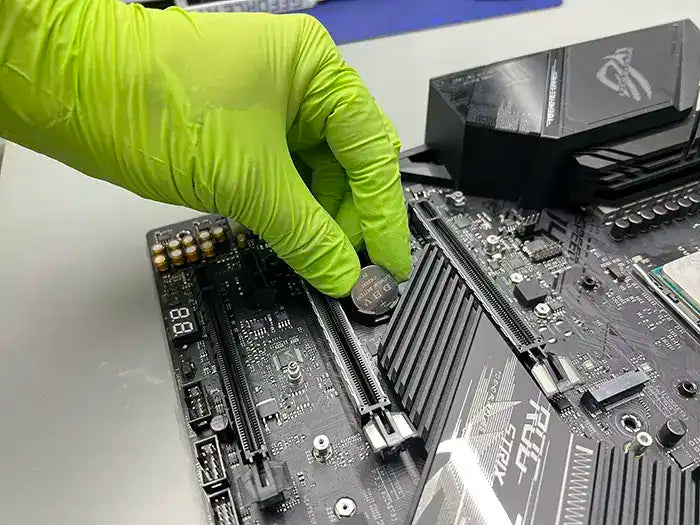
Why Your Gaming PC AIO Cooler Stops Working
¿Su PC gamer no funciona? Obtenga diagnóstico experto y opciones de reparación
Si su PC para juegos está experimentando problemas después de la instalación de una CPU, una actualización o un cambio de hardware, obtener un diagnóstico adecuado es el primer paso. Problemas como pines de CPU doblados, daños en el zócalo de la placa base o incompatibilidad de la BIOS pueden impedir que su sistema arranque.
En Prime Tech Support, nos especializamos en diagnósticos avanzados de PC para juegos y reparaciones a nivel de hardware, incluyendo problemas complejos que otras tiendas quizás no puedan resolver.
¿En Miami? Obtenga servicio local de reparación de PC gamer
Nuestro equipo está listo para ayudarle. Ofrecemos diagnósticos profesionales y tiempos de respuesta rápidos para PC para juegos y sistemas de alto rendimiento.
¿No está en Miami? Utilice nuestro servicio de reparación nacional por correo
Ofrecemos reparaciones seguras por correo a nivel nacional para PC gaming, incluyendo problemas de CPU y placa base. Ya sea que esté lidiando con pines doblados, daños por instalación o problemas de arranque, nuestros técnicos pueden diagnosticar y reparar su sistema de forma segura.
Trabajamos con clientes en todo Estados Unidos, ofreciendo comunicación clara, manejo cuidadoso y resultados profesionales.
Nuestros servicios de reparación de PC Gamer más populares en Miami


Opiniones de nuestros clientes de PC Gamer en EE. UU.
Increíble trabajo allí técnicos muy inteligentes, cualquier cosa que necesites explicar y tu deseo será concedido. Necesitaba la optimización de mi fuente de alimentación, y el técnico no tuvo problemas para hacerlo. Muchas gracias por el apoyo. Haz clic aquí para leer la reseña en Google
 Josué Sewell Miami, Florida
Traje mi PC para juegos por problemas de alta temperatura de la CPU. Estaba más que satisfecho con el servicio que recibí. Me mantuvieron informado durante todo el proceso de diagnóstico y reparación mediante el envío de imágenes y también los informes de diagnóstico. La ubicación es súper limpia y el personal y los expertos en tecnología fueron muy amables, educados e informativos durante todo el proceso. Me informaron que fabrican PC para juegos y ofrecen muchos servicios y mantenimiento para PC para juegos, lo cual es bueno saber y tener en el área de Miami. Sus servicios tienen un precio razonable. Lo recomiendo encarecidamente y volveré para cualquier necesidad futura. Haga clic aquí para leer la reseña en Yelp
 Jennifer Miami, Florida
Este es el lugar para cualquiera de sus necesidades de construcción de PC para juegos. Recientemente compré una tarjeta gráfica 4090 Founders edition y una carcasa LIAN LI XL y las necesitaba para transferir mis componentes de mi carcasa anterior a mi nueva carcasa junto con mi nueva tarjeta gráfica. Llamé al soporte técnico de Prime y estaban emocionados de hacer la instalación. Darian y Augustus me saludaron cuando llegué y terminé el trabajo el mismo día. Darian fue el técnico que hizo la instalación, e hizo un trabajo increíble y se ofreció a hacerme algunas pruebas cuando fui a recogerlo en persona, para demostrar que mi PC funcionaba a un nivel superior. Recomiendo este lugar para cualquier necesidad y compilación de PC para juegos.
Adjunto fotos de mi construcción.
¡gracias! Haga clic aquí para leer la reseña en Google
