

Best GPU-CPU Combinations for Gaming: Avoid Bottlenecks
Choosing the right graphics card is exciting, but pairing it with the wrong processor can leave a surprising amount of gaming performance on the table. A powerful GPU connected to an older CPU may never reach its full potential, while spending too much on a flagship processor for an entry-level graphics card often provides little real-world benefit.
The best gaming PC isn't built by buying the fastest individual components—it's built by selecting hardware that works well together. Your monitor resolution, refresh rate, the games you play, your motherboard, RAM, cooling, and power supply all influence which CPU and GPU combination makes the most sense.
Whether you're building a new gaming PC or planning your next upgrade, this guide will help you choose balanced CPU-GPU pairings, understand when bottlenecks actually matter, avoid common compatibility mistakes, and decide where your budget will have the biggest impact on gaming performance.
Table of Contents
Quick Answer: What Is the Best GPU-CPU Combination?
There isn't one perfect CPU-GPU combination for every gamer. The best pairing depends on your target resolution, refresh rate, game type, and budget.
- 1080p esports: Prioritize a stronger CPU to maximize high frame rates.
- 1440p gaming: Aim for a balanced CPU and GPU combination.
- 4K gaming: Invest more of your budget in the graphics card while choosing a modern CPU that won't limit future upgrades.
- Streaming or content creation: Choose a CPU with additional cores and a GPU with a capable hardware encoder.
The goal isn't eliminating every bottleneck—every computer has one somewhere. The goal is building a balanced system where neither component unnecessarily limits the other during the games you actually play.
What Makes a Good GPU-CPU Combination?
A good GPU-CPU combination is not necessarily the most expensive pairing. It is the combination that matches your resolution, refresh rate, game type, graphics settings, and overall system.
The CPU prepares the work required for each frame, including game logic, physics, AI behavior, player input, background tasks, and draw calls. The GPU then renders the final image, including resolution, textures, lighting, shadows, reflections, visual effects, and ray tracing.
When those two components are well matched, the system delivers more consistent frame rates, stronger 1% lows, and smoother frame pacing. When one component is much stronger than the other, the faster part may spend time waiting instead of contributing useful performance.
For a deeper explanation of how each component affects gaming performance, read our CPU vs GPU Gaming guide. This article focuses on the buying decision: how to pair both components correctly for your actual gaming target.
A Good Pairing Matches Your Gaming Goal
The right balance changes depending on what you expect the gaming PC to do.
- 1080p high-refresh esports: The CPU becomes more important because the system must prepare frames extremely quickly.
- 1440p high-settings gaming: The GPU handles more visual work, but the CPU still affects frame pacing and 1% lows.
- 4K, ultrawide, and ray tracing: GPU tier, VRAM, power delivery, and cooling become the main priorities.
- Simulation and strategy games: CPU performance can remain important because of AI, physics, pathfinding, and world simulation.
- Streaming while gaming: The CPU needs enough headroom for background applications, while the GPU encoder can reduce encoding load.
The Best Pairing Is Balanced, Not Equal in Price
A balanced build does not mean the CPU and GPU should cost the same amount. It means both components are appropriate for the same performance target.
For example, a 4K gaming build should normally dedicate more of the budget to the GPU because rendering at higher resolution places significantly more load on the graphics card. A 1080p 240Hz esports build may justify spending more on the CPU because smooth frame delivery and high minimum frame rates matter more than maximum visual quality.
The rest of the system also matters. A well-matched CPU and GPU can still underperform if the RAM is too slow, the power supply is inadequate, the BIOS is outdated, or the case cannot keep the components cool.
Technician insight: A mid-range CPU and GPU aimed at the same resolution and refresh rate can deliver a smoother gaming experience than a flagship graphics card installed in an outdated or poorly supported platform.
| Gaming Goal | Main Priority | Best Pairing Strategy |
|---|---|---|
| 1080p 60–144Hz | Value and balance | Use a modern mid-range CPU with an entry-to-mid-range GPU. |
| 1080p 165–240Hz+ | CPU and frame pacing | Choose a strong gaming CPU with a capable GPU. |
| 1440p high settings | Balanced CPU and GPU | Spend more on the GPU while keeping the CPU current. |
| 1440p high refresh | Both components | Use a strong CPU and strong GPU matched to the monitor. |
| 4K or ray tracing | GPU, VRAM, PSU, and cooling | Prioritize the graphics card and support it with a capable modern CPU. |
| Streaming and gaming | CPU headroom and GPU encoder | Choose enough CPU cores for multitasking and a GPU with reliable hardware encoding. |
Best CPU-GPU Combinations by Resolution and Gaming Style
Once you understand that a balanced system matters more than simply buying the fastest hardware, the next step is choosing components that match how you actually play. The ideal CPU-GPU combination for a competitive esports player is very different from one designed for cinematic single-player games or 4K gaming.
Your monitor resolution, refresh rate, favorite game genres, and future upgrade plans should all influence where you spend your budget. Rather than chasing the highest benchmark numbers, focus on building a system where every major component supports your gaming goals.
1080p Gaming: Prioritize the Processor for High Frame Rates
At 1080p, the graphics card has fewer pixels to render than at higher resolutions. This allows the GPU to complete its work more quickly, placing greater demand on the processor to prepare frames fast enough to keep up.
For players using 165Hz, 240Hz, or even 360Hz monitors, the CPU often has a larger impact on achieving consistently high frame rates and smooth frame pacing than upgrading to the most expensive graphics card.
Typical examples include:
- Competitive shooters such as Counter-Strike 2 and VALORANT.
- Battle royale games where maintaining high FPS improves responsiveness.
- MOBA and esports titles designed to run at extremely high refresh rates.
For most 1080p gaming builds, pairing a modern mid-range or high-end gaming CPU with a mid-range graphics card provides better value than investing heavily in a flagship GPU that may spend much of its time waiting for the processor.
1440p Gaming: The Best Balance for Most Players
Many enthusiasts consider 1440p the current sweet spot for PC gaming because it offers a significant improvement in image quality over 1080p while remaining much easier to drive than 4K.
At this resolution, both the CPU and GPU contribute meaningfully to overall performance, making balanced component selection especially important.
A typical budget allocation often favors the graphics card slightly, but the processor should still be modern enough to deliver stable 1% lows, support future GPU upgrades, and handle demanding open-world or simulation games.
Buying tip: If your budget is limited, prioritize purchasing components from the same performance tier instead of pairing an entry-level CPU with a flagship GPU or vice versa.
4K Gaming: Invest More in the Graphics Card
At 4K resolution, the graphics card performs substantially more rendering work because it must process four times as many pixels as 1080p. As a result, GPU performance becomes the primary factor affecting frame rates in most modern games.
That does not mean the CPU is unimportant. A modern processor is still necessary for smooth gameplay, background tasks, and future upgrades, but allocating more of the system budget toward a stronger graphics card generally provides the largest improvement in gaming performance.
When planning a 4K build, also remember to budget for:
- A quality power supply with sufficient wattage.
- Proper case airflow.
- Adequate CPU cooling.
- Enough VRAM for modern AAA titles.
| Gaming Scenario | Budget Priority | Recommended Strategy |
|---|---|---|
| 1080p Competitive Gaming | CPU | Choose a strong gaming processor with a capable mid-range GPU. |
| 1440p Gaming | Balanced | Select CPU and GPU from similar performance tiers. |
| 4K Gaming | GPU | Allocate more of the budget to the graphics card while keeping a modern CPU. |
| Streaming While Gaming | Balanced with CPU Headroom | Choose additional CPU cores and a GPU with a strong hardware encoder. |
| Simulation & Strategy Games | CPU | Favor processors with strong single-core and multi-core performance. |
Best CPU-GPU Combinations by Use Case
Resolution is only part of the equation. Two gamers playing at the same resolution can have completely different hardware needs depending on the types of games they play and whether they stream, multitask, or create content.
Instead of asking "What's the fastest CPU?" or "What's the best graphics card?", ask what kind of gaming experience you're trying to achieve. That approach almost always leads to a more balanced and cost-effective build.
Competitive Esports Gaming
Competitive titles reward high frame rates, low latency, and consistent frame pacing more than maximum graphics quality. Games such as Counter-Strike 2, VALORANT, Rainbow Six Siege, Rocket League, and Fortnite Performance Mode often run with reduced visual settings so players can maximize FPS.
For these systems, invest in:
- A fast gaming CPU with excellent single-core performance.
- Fast dual-channel DDR5 memory.
- A capable mid-range GPU rather than the most expensive graphics card available.
- A high-refresh monitor that can actually display the additional frames.
Overspending on the GPU while using an older processor frequently results in lower-than-expected frame rates because the CPU cannot prepare frames quickly enough.
AAA Single-Player Gaming
Story-driven games with detailed environments place much heavier demands on the graphics card. Titles such as Cyberpunk 2077, Alan Wake 2, Black Myth: Wukong, and Starfield rely heavily on GPU performance for high-resolution textures, lighting, shadows, and ray tracing.
For this type of gaming, prioritize:
- A stronger GPU with sufficient VRAM.
- A modern CPU that can maintain smooth frame pacing.
- A quality power supply and adequate cooling.
If your goal is better image quality rather than maximum FPS, spending more on the graphics card usually provides the largest improvement.
Streaming and Content Creation
Streaming introduces another workload beyond the game itself. While you're gaming, the computer may also be encoding video, recording gameplay, running OBS Studio, Discord, browser tabs, overlays, music applications, and chat software.
A balanced streaming system should include:
- A processor with enough cores for multitasking.
- A modern GPU that supports hardware video encoding.
- At least 32GB of RAM for heavier multitasking.
- Fast NVMe storage for recordings and game installations.
Many gamers focus only on FPS, but streaming stability depends just as much on CPU headroom and memory capacity.
Simulation, Strategy, and Open-World Games
Games like Microsoft Flight Simulator, Cities: Skylines II, Civilization VII, Total War, and other large simulation titles often place more demand on the processor than many traditional action games.
These games continuously calculate:
- Artificial intelligence
- Physics
- Traffic systems
- NPC behavior
- World simulation
- Asset streaming
Even with a powerful graphics card, these workloads can expose CPU limitations during busy scenes. Investing in a stronger processor often improves gameplay more than purchasing a larger GPU.
Professional recommendation: Buy hardware for the games you play most—not the benchmark charts you see online. A balanced PC built around your actual workload almost always delivers a better gaming experience than chasing the highest specifications.
| Gaming Style | Prioritize | Why |
|---|---|---|
| Competitive Esports | CPU | High frame rates and low latency depend on fast frame preparation. |
| AAA Single-Player Games | GPU | Higher resolutions, textures, and ray tracing increase GPU workload. |
| Streaming & Recording | Balanced CPU, GPU, and RAM | Gaming and encoding run simultaneously. |
| Simulation & Strategy | CPU | AI, physics, and world simulation create heavy processor workloads. |
| General Gaming | Balanced Build | Matching component tiers produces smoother overall performance. |
Understanding CPU and GPU Bottlenecks
One of the biggest concerns when choosing gaming hardware is avoiding a bottleneck. While the term is often overused online, a bottleneck simply means one component reaches its performance limit before another, preventing the system from delivering its maximum potential.
Every gaming PC has a bottleneck somewhere. The objective isn't to eliminate bottlenecks completely—that's impossible. Instead, the goal is to build a balanced system where neither the CPU nor the GPU significantly limits performance during the games you actually play.
What Is a CPU Bottleneck?
A CPU bottleneck occurs when the processor cannot prepare frames quickly enough for the graphics card. As a result, the GPU spends part of its time waiting for new instructions instead of rendering additional frames.
This situation is most common in:
- 1080p gaming at very high refresh rates.
- Competitive esports titles.
- Simulation and strategy games with heavy AI or physics calculations.
- Systems that pair an older processor with a modern high-end graphics card.
Typical symptoms include lower-than-expected FPS, inconsistent frame pacing, and low GPU utilization even while gaming.
What Is a GPU Bottleneck?
A GPU bottleneck happens when the graphics card becomes the limiting factor because it cannot render frames as quickly as the processor can prepare them.
This is completely normal in many gaming systems, especially at higher resolutions where the graphics workload increases significantly.
GPU bottlenecks are commonly seen when:
- Gaming at 1440p or 4K.
- Using Ultra graphics settings.
- Enabling ray tracing.
- Playing visually demanding AAA games.
In these situations, GPU utilization approaching 95–100% is generally expected and often indicates the graphics card is being fully utilized.
Technician tip: Don't panic if monitoring software shows 99% GPU usage during gaming. That's often exactly what you want to see. A consistently underutilized GPU paired with low frame rates is usually a stronger indicator that another component may be limiting performance.
| CPU Bottleneck | GPU Bottleneck |
|---|---|
| Common at 1080p and high refresh rates | Common at 1440p and 4K |
| GPU usage may stay well below 100% | GPU usage often remains near 100% |
| Processor cannot prepare frames fast enough | Graphics card cannot render frames fast enough |
| Often improved with a CPU upgrade | Often improved with a GPU upgrade or lower graphics settings |
Remember: A bottleneck isn't automatically a problem. If your system delivers the frame rates and visual quality you expect, there's no reason to upgrade simply because an online bottleneck calculator says you should. Real-world gaming performance is far more meaningful than theoretical percentages.
Should You Upgrade Your CPU or GPU First?
If your gaming PC isn't performing the way you expected, replacing the most expensive component isn't always the best solution. The smartest upgrade depends on where your current system is reaching its limits.
Before buying new hardware, consider the games you play, your monitor resolution, your target frame rate, and the age of your existing platform. In many cases, upgrading a single component provides a noticeable improvement. In others, a platform upgrade delivers far better long-term value.
Upgrade Your CPU If...
A processor upgrade is usually the better investment when the graphics card still has available performance but the CPU struggles to keep up with the workload.
- You mainly play competitive esports games at 1080p.
- Your GPU utilization remains well below 90% while gaming.
- You're experiencing poor 1% lows or inconsistent frame pacing.
- You stream while gaming and frequently multitask.
- Your processor is several generations old.
- Your current CPU is limiting a recently upgraded graphics card.
Upgrade Your GPU If...
A graphics card upgrade usually provides the largest improvement when gaming at higher resolutions or when visual quality is more important than extremely high frame rates.
- You game primarily at 1440p or 4K.
- You want to enable higher graphics settings or ray tracing.
- Your GPU is consistently running near 100% utilization.
- Your graphics card lacks enough VRAM for modern AAA games.
- You want support for newer rendering technologies such as DLSS or FSR.
When a Platform Upgrade Makes More Sense
Sometimes replacing only the CPU or only the GPU isn't the most cost-effective option. Older platforms may also require a new motherboard, faster memory, or a higher-capacity power supply before newer hardware can perform properly.
A complete platform upgrade is often worth considering when:
- Your motherboard does not support newer processors.
- You're still using an older DDR4 platform and planning a high-end GPU upgrade.
- Your current power supply cannot safely support a newer graphics card.
- Your cooling solution or case airflow is no longer adequate.
- You want a system that can support future hardware upgrades for several years.
Professional recommendation: Think beyond today's upgrade. Choosing compatible components with room for future expansion can save money and prevent multiple hardware replacements over the next few years.
Upgrade Decision Guide
| Your Situation | Recommended Upgrade | Reason |
|---|---|---|
| 1080p esports with low GPU usage | CPU | The processor is likely limiting frame rates. |
| 1440p or 4K gaming with GPU near 100% | GPU | The graphics card is the primary performance limit. |
| Older motherboard and CPU platform | Platform Upgrade | Modern hardware may require a new motherboard and memory. |
| Streaming while gaming | CPU and RAM | Additional processing power improves multitasking and stream stability. |
| Building a brand-new gaming PC | Balanced CPU-GPU Combination | Matching component performance provides the best overall experience. |
Not sure which upgrade will deliver the biggest improvement? Our technicians can perform a complete gaming PC diagnostic to identify whether your CPU, GPU, memory, cooling, or power delivery is limiting performance before you invest in new hardware.
Compatibility Checklist Before Buying a New CPU or GPU
Finding the right CPU and GPU combination is only part of building a successful gaming PC. Before purchasing new hardware, it's important to verify that the rest of your system can support the upgrade. Compatibility problems are one of the most common reasons gamers experience boot failures, reduced performance, or unexpected additional expenses.
A few minutes spent checking your existing hardware can prevent costly mistakes and ensure every new component performs as expected.
CPU Compatibility Checklist
Before purchasing a new processor, confirm that your motherboard supports it. Even processors from the same manufacturer may require a different socket or a BIOS update before they can function correctly.
- Verify the motherboard socket matches the processor.
- Check the manufacturer's CPU support list.
- Confirm whether a BIOS update is required.
- Make sure your motherboard's VRM can properly support higher-end processors.
- Verify compatibility with your existing DDR4 or DDR5 memory.
- Ensure your CPU cooler supports the new socket and thermal requirements.
If you're unsure whether your motherboard supports a newer processor, review the manufacturer's compatibility list before ordering any components.
GPU Compatibility Checklist
Graphics card upgrades involve more than simply finding an available PCIe slot. Modern GPUs have become larger, consume more power, and often require improved airflow compared to previous generations.
- Measure available GPU clearance inside the case.
- Check the graphics card thickness and available expansion slots.
- Verify your power supply provides enough continuous wattage.
- Confirm the correct PCIe power connectors are available.
- Use a native 12V-2x6 cable when recommended by the PSU manufacturer.
- Ensure adequate case airflow for higher-performance GPUs.
- Consider using a GPU support bracket for heavier graphics cards.
Don't Forget the Supporting Hardware
Even perfectly matched CPUs and GPUs can underperform if other components become limiting factors. Memory capacity, storage speed, cooling, and power delivery all contribute to a stable gaming experience.
Before completing your upgrade, also verify:
- Your system has enough RAM for modern games and multitasking.
- Your NVMe SSD has sufficient free space for current game installations.
- Your CPU cooler can handle the processor's thermal output.
- Your case provides adequate airflow for both the CPU and GPU.
- Your monitor resolution matches the performance level you're building for.
Technician tip: Many gamers upgrade only the graphics card while overlooking an aging power supply or outdated BIOS. Verifying compatibility before installing new hardware helps prevent stability issues and unnecessary troubleshooting.
Pre-Upgrade Checklist
| Item to Verify | Why It Matters |
|---|---|
| CPU Socket Compatibility | Ensures the processor physically fits the motherboard. |
| Motherboard BIOS Version | Some newer CPUs require a BIOS update before booting. |
| DDR4 or DDR5 Memory Support | Motherboards support one memory generation, not both. |
| Power Supply Capacity | Provides stable power for modern CPUs and GPUs. |
| PCIe Power Connectors | Confirms the graphics card can be connected safely. |
| GPU Length and Thickness | Prevents clearance issues inside the computer case. |
| CPU Cooler Compatibility | Maintains safe operating temperatures. |
| Case Airflow | Reduces thermal throttling during extended gaming sessions. |
| Future Upgrade Path | Helps avoid replacing multiple components later. |
Professional advice: The best gaming PC isn't just powerful—it's compatible, stable, and built with future upgrades in mind. Taking the time to verify every component before purchasing can save hundreds of dollars in unnecessary replacements and significantly reduce installation headaches.
Real Diagnostic Case: A GPU Upgrade That Didn't Increase FPS
One of the most common misconceptions we see is that installing the newest graphics card will automatically deliver a dramatic increase in gaming performance. In reality, overall system balance is just as important as the GPU itself.
A customer brought us a custom gaming PC after upgrading to a high-end graphics card. Although synthetic benchmarks looked normal, many of the games they played at 1080p showed only a small improvement in frame rates compared to their previous GPU.
During our diagnostic process, we found that the graphics card wasn't the problem. Monitoring software showed GPU utilization frequently dropping below full load while the processor was consistently reaching its limits during gameplay.
The system was still running an older CPU platform with slower DDR4 memory. At high refresh rates, the processor simply couldn't prepare frames fast enough to keep the new graphics card fully utilized.
Rather than recommending another graphics card, we suggested a platform upgrade that included:
- A newer gaming processor.
- A compatible motherboard.
- DDR5 memory.
- A BIOS update before installing the new hardware.
After the upgrade, the customer experienced significantly smoother gameplay, higher average frame rates, improved 1% lows, and much more consistent GPU utilization. The graphics card itself hadn't changed—the rest of the platform finally allowed it to perform as intended.
Key takeaway: Expensive hardware doesn't guarantee better gaming performance. In many cases, a balanced platform upgrade delivers a much larger improvement than replacing a single component.
Planning a Gaming PC Upgrade?
If you're unsure whether your CPU, GPU, memory, motherboard, or power supply is limiting performance, a professional diagnostic can help you upgrade with confidence instead of guessing.
At Prime Tech Support, we evaluate your complete gaming system, verify hardware compatibility, identify performance bottlenecks, and recommend the upgrades that will provide the greatest improvement for your budget.
Schedule a Gaming PC DiagnosticChoose the Right CPU-GPU Combination for Long-Term Gaming Performance
The best gaming PC isn't built by choosing the most expensive processor or the fastest graphics card available. It's built by selecting components that complement one another and match the way you actually play. A balanced system delivers smoother gameplay, more consistent frame rates, better upgrade flexibility, and greater value over time.
Before purchasing new hardware, consider your monitor resolution, refresh rate, favorite games, streaming needs, motherboard compatibility, memory, cooling, and power supply. Looking at the entire platform instead of a single component can help you avoid costly mistakes and ensure every upgrade delivers meaningful performance improvements.
Whether you're building your first gaming PC or upgrading an existing system, taking the time to plan compatible hardware will almost always produce better results than simply buying the latest flagship components.
Need Help Choosing the Right Gaming PC Upgrade?
If you're not sure whether your CPU, GPU, motherboard, RAM, cooling system, or power supply is limiting your gaming performance, our technicians can help. We perform comprehensive gaming PC diagnostics, compatibility inspections, hardware upgrades, BIOS updates, cooling improvements, and performance optimization to ensure your system delivers the best possible gaming experience.
Instead of guessing which component to replace, let our team identify the upgrades that will provide the greatest improvement for your budget.
Schedule Your Gaming PC Diagnostic Today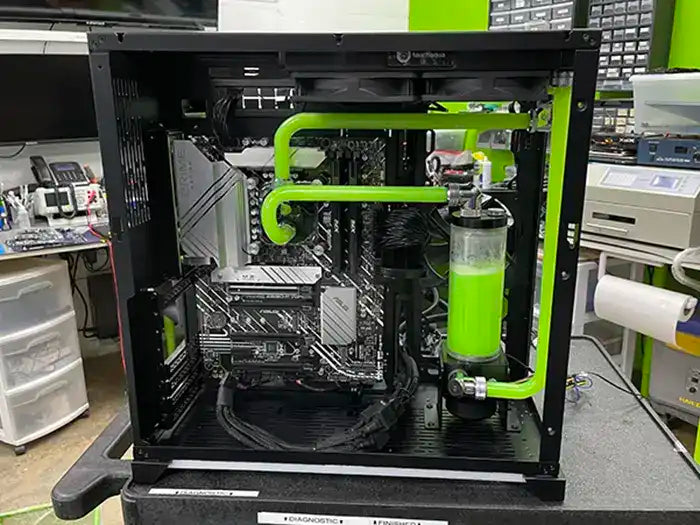
FAQ Best GPU-CPU Combinations for Gaming: Avoid Bottlenecks
Can mixing different RAM kits cause game crashes?
Should I replace my RAM after one game crash?
Does every gaming PC have a bottleneck?
Should my GPU always run at 100% while gaming?
How do I know if my CPU is limiting my GPU?
Question: Is DDR5 worth it for a new gaming PC?
Can an old power supply limit a new graphics card?
Is it better to upgrade my CPU or GPU first?
Can I install any graphics card on my motherboard?
How important is RAM when choosing a CPU and GPU?
When should I seek professional upgrade advice?
Gaming PC Not Working? Get Expert Diagnosis and Repair Options
If your gaming PC is experiencing issues after a CPU installation, upgrade, or hardware change, getting a proper diagnosis is the first step. Problems like bent CPU pins, motherboard socket damage, or BIOS incompatibility can prevent your system from booting.
At Prime Tech Support, we specialize in advanced gaming PC diagnostics and hardware-level repairs, including complex issues that other shops may not be able to resolve.
In Miami? Get Local Gaming PC Repair Service
Our team is ready to help you. We offer professional diagnostics and fast turnaround times for gaming PCs and high-performance systems.
Not in Miami? Use Our Nationwide Mail-In Repair Service
We provide secure nationwide mail-in repairs for gaming PCs, including CPU and motherboard issues. Whether you're dealing with bent pins, installation damage, or no-boot problems, our technicians can safely diagnose and repair your system.
We work with customers across the United States, offering clear communication, careful handling, and professional results.
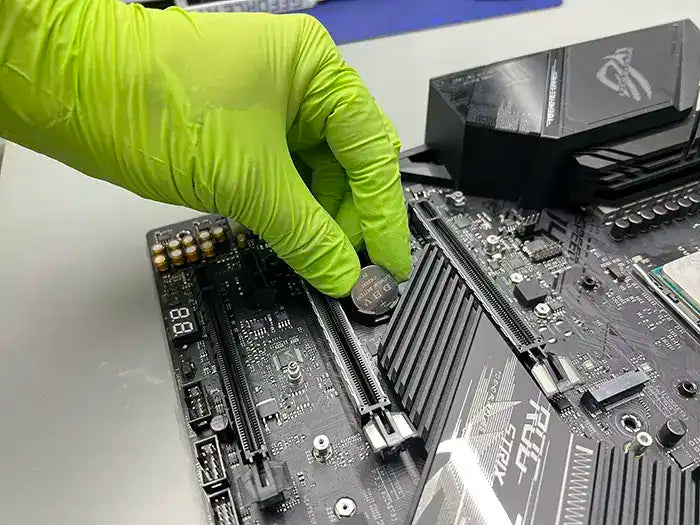
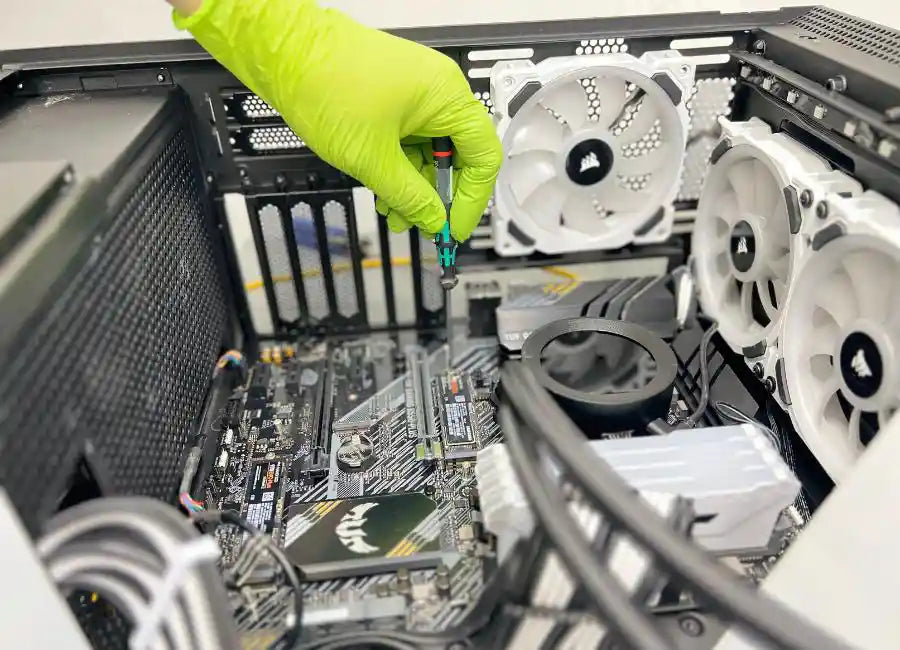
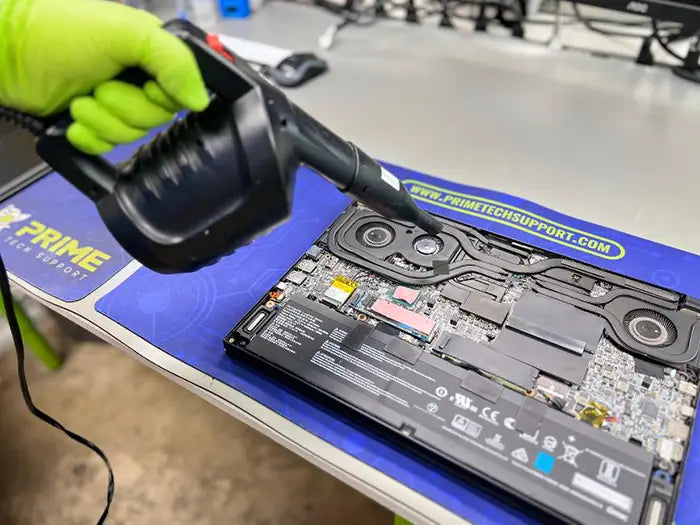
Gaming PC Repair Services (Miami & Nationwide)


Reviews from our Gaming PC Customers in USA
Amazing work there very smart techs, anything you need done explain and your wish will be granted. I needed my power supply optimization, and the tech had no issues doing it. Thank you so much for the support. Click here to read the review on Google
 Joshua Sewell Miami, FL
I brought in my gaming PC for high CPU temperature issues. I was beyond pleased with the service I received. They kept me informed through out the diagnostic process and repair by sending pictures and also the diagnostic reports. The location is super clean and the staff and tech experts were super friendly, polite, and informative through out the process. I was informed they do gaming pc builds and offer a lot services and maintenance for gaming PCs, which is good to know and have in the miami area. Their services are reasonably priced. Highly recommend and will be coming back for any future needs. Click here to read the review on Yelp
 Jennifer Miami, FL
This is the place for any of your gaming pc build needs. I recently purchased a 4090 Founders edition graphics card and a LIAN LI XL case and needed them to transfer my components from my old case to my new case along with my new graphics card. I called Prime tech support, and they were excited to do the install Darian and Augustus greeted me when I arrived and finished the job the same day! Darian was the tech that did the installation, and he did an amazing job and offered to run some tests for me when I came to pick it up in person, to show my PC was running at a premium level. I recommend this place for any gaming pc needs and builds.
I am attaching pictures of my build.
thank you! Click Here to read th review on Google
