

XMP vs EXPO Explained: How RAM Profiles Affect Gaming Performance
Many XMP- and EXPO-rated gaming RAM kits do not run at their advertised speed immediately after installation. For example, a DDR5-6000 memory kit may initially boot at a lower default JEDEC speed and only reach its rated performance after the correct memory profile is enabled in the BIOS.
That's where XMP and EXPO come in.
XMP and EXPO are BIOS-level memory profiles that store preconfigured RAM settings, including frequency, timings, and voltage. They are not magic FPS boosters, but they allow compatible memory kits to operate the way they were designed and validated by the manufacturer.
For gamers, the biggest benefit isn't always a dramatic increase in average FPS. In many CPU-sensitive games, enabling the correct memory profile can improve:
- Frame consistency
- 1% low FPS
- Overall system responsiveness
- CPU-limited gaming performance
- Integrated graphics performance
- System stability when the profile is fully supported
The important word is supported. XMP and EXPO depend on your complete hardware configuration, including the RAM kit, motherboard, BIOS version, CPU memory controller, and even the DIMM slot configuration. When one of those components isn't compatible, enabling a memory profile can result in crashes, blue screens, boot loops, or stuttering that may appear to be caused by the CPU or GPU.
In this guide, you'll learn the differences between Intel XMP and AMD EXPO, how each memory profile affects gaming performance, which one to enable for your platform, and what to do if your gaming PC becomes unstable after changing BIOS memory settings.
Table of Contents
Quick Answer: XMP vs EXPO for Gaming
If you're building or upgrading a gaming PC, the correct memory profile depends on your processor platform. XMP (Extreme Memory Profile) is Intel's memory profile technology, while EXPO (Extended Profiles for Overclocking) is AMD's DDR5 memory profile technology designed for Ryzen AM5 systems.
Both profiles store preconfigured RAM settings—including frequency, timings, and voltage—that allow compatible memory kits to run closer to their rated speed instead of the slower default JEDEC settings.
Quick Recommendation
- Use XMP on Intel gaming PCs.
- Use EXPO on AMD Ryzen AM5 gaming PCs.
- Always enable the profile that matches your CPU platform first.
- After enabling XMP or EXPO, verify the memory speed in Windows and test system stability before assuming everything is working correctly.
For gaming, a stable memory profile is always better than the fastest profile available. If the highest-speed profile causes crashes, boot loops, or blue screens, choosing a slightly slower but fully stable profile will provide a better gaming experience.
| Feature | XMP | EXPO | Gaming Takeaway |
|---|---|---|---|
| Designed for | Intel platforms | AMD Ryzen AM5 platforms | Use the profile that matches your CPU platform. |
| Memory Type | DDR4 and DDR5 | Primarily DDR5 | Confirm your RAM kit, motherboard, and CPU all support the selected profile. |
| Stores | Frequency, timings, and voltage | Frequency, timings, and voltage | Both apply tested memory settings automatically through the BIOS. |
| Considered Overclocking? | Yes | Yes | Both normally operate memory above the default JEDEC specification. |
| Guaranteed Stable? | No | No | Always perform stability testing after enabling either profile. |
| If Your Board Supports Both | Use XMP on Intel | Use EXPO on AMD | Choose the platform-specific profile before trying alternatives. |
Not sure if your RAM is compatible with your motherboard or why your PC became unstable after enabling XMP or EXPO? Our Gaming PC Computer Diagnostics service can identify RAM compatibility, BIOS, motherboard, or CPU memory controller issues before you replace any hardware.
What Are RAM Profiles in BIOS?
RAM profiles are preset memory configurations stored directly on a RAM kit. Instead of manually entering memory frequency, timings, and voltage in the BIOS, you can enable a profile such as XMP or EXPO, allowing the motherboard to automatically apply the manufacturer's tested settings.
For gamers, this matters because a memory kit advertised as DDR5-6000 or DDR5-6400 may initially operate at a slower default JEDEC speed until the correct profile is enabled.
Why RAM Often Runs Slower by Default
Memory typically boots at a conservative default speed defined by JEDEC, the organization responsible for establishing memory standards. These default settings are designed to maximize compatibility across different combinations of:
- CPUs
- Motherboards
- BIOS versions
- RAM kits
- Memory slot configurations
This is completely normal and does not indicate that your RAM is defective.
For example, a DDR5-6000 kit may initially run at DDR5-4800 until XMP or EXPO is enabled in the BIOS. Once the correct profile is activated, the motherboard applies the tested frequency, timings, and voltage stored on the memory module.
What Does an XMP or EXPO Profile Change?
When you enable a memory profile, the motherboard applies a predefined combination of settings that have been validated by the RAM manufacturer.
| Setting | What It Controls | Why It Matters for Gaming |
|---|---|---|
| Frequency | The operating speed of the memory (for example, DDR5-5600 or DDR5-6000) | Higher memory speeds can improve performance in CPU-bound games and high-refresh-rate gaming. |
| Timings | Latency values such as CL, tRCD, tRP, and tRAS | Balanced timings help improve responsiveness and frame consistency. |
| Voltage | The operating voltage required by the memory profile | Higher-performance profiles often require additional voltage to remain stable. |
These settings work together. Increasing frequency often requires different timings and voltage to maintain stability, which is why XMP and EXPO profiles exist. Instead of manually tuning dozens of settings, the BIOS loads a manufacturer-tested configuration.
However, a tested profile is not a guaranteed profile. Stability still depends on your motherboard, BIOS version, CPU memory controller, cooling, and overall system compatibility.
Why XMP and EXPO Are Considered Memory Overclocking
Although enabling XMP or EXPO is common for gaming PCs, both technologies are technically considered memory overclocking. In most cases, they operate RAM above the default JEDEC specification.
That is why these profiles are not automatically enabled on a new system. Motherboards first boot using conservative settings to maximize compatibility before allowing users to enable higher-performance memory profiles.
- JEDEC Speed = Safe default memory speed.
- XMP or EXPO = Manufacturer-tested performance profile.
- Manual Memory Tuning = Advanced overclocking beyond the preset profiles.
For most gamers, enabling the appropriate XMP or EXPO profile is the easiest way to get the performance they paid for, provided the motherboard, CPU, and RAM kit fully support that configuration.
Before enabling any memory profile, it's also worth confirming that your RAM is compatible with your motherboard. Our DDR5 RAM Compatibility and Upgrade Guide explains how motherboard support, memory training, and Qualified Vendor Lists (QVLs) affect stability.
XMP vs EXPO: Key Differences for DDR5 Gaming PCs
XMP and EXPO are both BIOS memory profile technologies that allow your motherboard to apply preconfigured RAM settings instead of requiring you to manually adjust memory frequency, timings, and voltage.
The biggest difference is the platform each one is designed for:
- XMP is Intel's memory profile technology and is generally the best starting point for Intel gaming PCs.
- EXPO is AMD's Ryzen-optimized DDR5 memory profile technology and is typically the best choice for AMD AM5 gaming systems.
- If your motherboard displays both profiles, begin with the one designed for your CPU platform.
Intel XMP: Best Fit for Intel Platforms
According to Intel's official XMP documentation, XMP allows compatible DDR4 and DDR5 memory to operate beyond standard JEDEC specifications by using pre-tested memory profiles stored on the RAM module.
On most Intel gaming motherboards, you'll typically find options such as:
- Intel XMP
- XMP Profile 1
- XMP Profile 2
- XMP 3.0
XMP 3.0 supports multiple profiles on some memory kits. One profile may prioritize maximum rated speed, while another may use slightly more conservative settings that can improve compatibility and long-term stability.
For Intel gaming systems, XMP is generally the recommended starting point because the profiles are validated around Intel platforms.
AMD EXPO: Best Fit for Ryzen AM5 Platforms
AMD EXPO (Extended Profiles for Overclocking) was developed specifically for Ryzen AM5 DDR5 platforms.
Like XMP, EXPO stores preconfigured settings for:
- Memory frequency
- Primary timings
- Operating voltage
- Platform-specific tuning information
The difference is that EXPO profiles are optimized around AMD Ryzen memory controllers. Although RAM speeds may look identical on paper, AMD and Intel platforms can respond differently depending on the motherboard, BIOS version, and CPU memory controller.
An EXPO-certified memory kit provides AMD users with a better starting point for stability, although it should still be tested after installation.
What If Your Motherboard Shows Both?
Some modern motherboards support both XMP and EXPO profiles when the installed DDR5 kit includes them.
When that happens, use the profile that matches your processor.
| System Type | Recommended Profile | Reason |
|---|---|---|
| Intel Gaming PC | XMP | Designed and validated primarily for Intel platforms. |
| AMD Ryzen AM5 Gaming PC | EXPO | Optimized for AMD Ryzen DDR5 memory behavior. |
| AMD Board Showing Only XMP | XMP (Test Stability) | May work correctly, but stability should always be verified. |
| Board Showing Both Profiles | Use the Platform-Specific Profile | Provides the best starting point for compatibility and stability. |
Running an XMP profile on an AMD system—or an EXPO profile on an Intel system—can work in many cases, but it isn't always the most stable configuration. If the first profile causes crashes or boot issues, try a secondary profile or a slightly lower memory speed before assuming the RAM is defective.
What About DOCP, A-XMP, and Other BIOS Labels?
Not every motherboard manufacturer uses Intel's or AMD's branding directly. Depending on your motherboard, memory profiles may appear under different names.
| BIOS Label | Typically Found On | Purpose |
|---|---|---|
| XMP | Intel platforms | Applies Intel XMP memory profiles. |
| EXPO | AMD AM5 platforms | Applies AMD EXPO memory profiles. |
| DOCP | ASUS AMD motherboards | ASUS implementation for applying stored memory profiles. |
| A-XMP | MSI motherboards | MSI BIOS implementation of XMP profiles. |
| Memory Profile / Overclock Profile | Various manufacturers | Generic BIOS terminology for stored RAM profiles. |
Although the names differ, the goal is the same: automatically apply validated memory settings instead of manually entering frequency, timings, and voltage.
- Choose the profile designed for your CPU platform.
- Save the BIOS changes and reboot.
- Verify the RAM speed in Windows.
- Test system stability before assuming the configuration is reliable.
If the highest-speed profile causes instability, a slightly slower stable profile will almost always deliver a better gaming experience.
If you're still deciding which DDR5 kit to purchase, our guide to the best DDR5 RAM brands and our DDR5 RAM Compatibility Guide can help you choose a memory kit that matches your motherboard and gaming platform.
How XMP and EXPO Affect Gaming Performance
XMP and EXPO can improve gaming performance, but the results depend on the game, screen resolution, CPU platform, GPU workload, and whether your RAM is currently running below its rated speed.
When the correct memory profile is enabled, you may see improvements in:
- Average FPS
- 1% low FPS
- Frame pacing and consistency
- Overall system responsiveness
- Performance in CPU-bound games
However, the improvement is not universal. In many cases, running a stable memory profile is far more important than simply selecting the highest speed available in the BIOS.
Where Faster RAM Can Improve FPS and 1% Lows
The biggest gains from XMP or EXPO usually appear in CPU-limited gaming scenarios, where the processor relies heavily on memory bandwidth and latency to feed frames to the graphics card.
Common examples include:
- High-refresh-rate 1080p gaming
- Esports titles
- Simulation games
- Strategy games
- Open-world games with large numbers of active NPCs or background calculations
- Systems using integrated graphics or AMD APUs
In these situations, enabling the correct memory profile can improve frame consistency and 1% lows. While average FPS may increase, the smoother gameplay experience is often the most noticeable improvement.
Integrated graphics systems benefit even more because the GPU shares system memory. Faster RAM can significantly increase available memory bandwidth, directly affecting gaming performance.
To better understand how RAM capacity, speed, and dual-channel memory work together, read our guide on the impact of RAM on gaming performance.
Where the Difference May Be Small
Performance gains become much smaller when the graphics card is already the primary bottleneck.
This commonly happens during:
- 1440p gaming with high graphics settings
- 4K gaming
- Ray tracing-heavy titles
- Single-player games that are primarily GPU limited
- Systems where XMP or EXPO is already enabled correctly
In these situations, enabling XMP or EXPO is still recommended if your memory is running below its rated speed, but you should not expect dramatic FPS increases if the graphics card is already working at full capacity.
Why Stability Matters More Than Maximum Speed
A stable memory profile will always provide a better gaming experience than an unstable high-speed profile.
An unstable XMP or EXPO configuration can cause:
- Game crashes
- Blue screens
- Boot loops
- Random restarts
- Corrupted game files or settings
- Micro-stuttering that appears to be caused by the CPU or GPU
There is little benefit in running DDR5-7200 if your system crashes every few hours. In most gaming PCs, a stable DDR5-6000 profile delivers a much better overall experience than a faster configuration that cannot remain stable.
If your RAM kit includes multiple XMP or EXPO profiles, start with the profile designed for your platform. If that profile isn't stable, try a secondary profile or reduce the memory speed slightly before assuming the RAM is incompatible.
Not Sure Whether RAM Is Limiting Your Gaming Performance?
FPS drops, stuttering, and crashes aren't always caused by memory. They can also be related to CPU bottlenecks, GPU overheating, outdated BIOS versions, or motherboard compatibility.
If you're unsure where the problem starts, our Gaming PC Computer Diagnostics service can identify whether the issue is related to RAM, BIOS settings, motherboard compatibility, or another hardware component before you replace parts unnecessarily.
2026 Update: EXPO Ultra Low Latency Memory
During Computex 2026, AMD introduced EXPO Ultra Low Latency (EXPO ULL), an enhancement to the EXPO platform designed for certified low-latency DDR5 memory kits on supported AM5 systems.
According to AMD, EXPO ULL may improve average gaming performance compared to standard EXPO memory profiles. However, this should not be viewed as an automatic upgrade recommendation.
Before purchasing EXPO ULL memory, verify:
- Your motherboard BIOS supports EXPO ULL.
- Your Ryzen processor is compatible.
- The memory kit is officially EXPO ULL certified.
- Independent testing confirms meaningful real-world performance improvements.
If your current DDR5 memory is already stable and performing well, there is little reason to upgrade solely because EXPO ULL is available. Waiting for broader compatibility and additional testing is often the better long-term decision.
Should You Enable XMP or EXPO for Gaming?
In most gaming PCs, the answer is yes. If your RAM is running below its rated speed and your system is stable at default settings, enabling XMP or EXPO allows your memory to operate closer to the performance it was designed to deliver.
The key is enabling the profile that matches your platform and verifying that the system remains stable afterward. XMP and EXPO are intended to unlock your RAM's rated performance—not to compensate for an unstable motherboard, outdated BIOS, or incompatible hardware.
Enable It If Your RAM Is Running Below Its Rated Speed
The easiest way to check your current memory speed is through Windows Task Manager.
- Press Ctrl + Shift + Esc.
- Open the Performance tab.
- Select Memory.
- Check the displayed memory speed.
If your DDR5-6000 kit is only running at DDR5-4800 or another lower JEDEC speed, XMP or EXPO is probably not enabled.
That is the primary reason to enable a memory profile: your RAM is capable of operating at a higher tested speed, but the motherboard is still using its default compatibility settings.
| Situation | Enable XMP or EXPO? | Recommendation |
|---|---|---|
| RAM running below its rated speed | ✅ Yes | Enable the correct profile and verify stability. |
| New gaming PC build | ✅ Yes | Enable the appropriate profile during BIOS setup, then test the system. |
| Matched dual-channel RAM kit installed correctly | ✅ Yes | This is typically the most stable configuration. |
| Four RAM sticks installed | ⚠️ Yes, but test carefully | Four DIMMs place additional stress on the CPU memory controller. |
| Mixed RAM kits or different brands | ⚠️ Use caution | Mixed kits are more likely to become unstable when memory profiles are enabled. |
| System already unstable at default settings | ❌ No | Diagnose the existing issue before enabling XMP or EXPO. |
| Recent crashes or blue screens | ❌ Not yet | Resolve the current instability before changing memory settings. |
Be Careful If You Mixed RAM Kits or Filled All Four Slots
Combining two different RAM kits—even if they have the same capacity and advertised speed—can reduce stability. Manufacturers validate each kit as a matched set, not every possible combination of modules.
When XMP or EXPO is enabled on mixed memory, the motherboard must synchronize every module using the same frequency, timings, and voltage. Differences in memory chips, subtimings, or production batches can make that difficult.
Four-stick configurations can also place more stress on the CPU's integrated memory controller than a standard two-stick setup. That is one reason many high-speed DDR5 gaming systems achieve their best stability using two matched DIMMs instead of four.
Avoid Aggressive Profiles on Unstable Systems
If your gaming PC already experiences crashes, freezes, random restarts, or blue screens at default memory settings, enabling XMP or EXPO should not be your first troubleshooting step.
Adding a memory profile introduces another variable, making it much harder to determine whether the problem is related to RAM, BIOS settings, motherboard compatibility, CPU memory controller limitations, overheating, drivers, or another hardware issue.
Instead, follow this simple approach:
- If the PC is stable at default memory speed, enable the correct profile and perform stability testing.
- If the PC is unstable at default settings, diagnose the underlying problem first.
- If instability only appears after enabling XMP or EXPO, return to default settings and try a lower or secondary memory profile.
Recommended Profile by Platform
| Platform | Recommended Profile | Next Step |
|---|---|---|
| Intel Gaming PC | XMP | Enable XMP, verify the speed in Windows, and test stability. |
| AMD Ryzen AM5 Gaming PC | EXPO | Enable EXPO, verify the speed, and perform stability testing. |
| AMD Board with Only XMP Available | XMP (Test Carefully) | It may work correctly, but stability should always be verified. |
| Motherboard Showing Both Profiles | Use the Platform-Specific Profile | Select XMP for Intel or EXPO for AMD before trying other options. |
If you're also selecting a new memory kit, our Best DDR5 RAM Brands for Gaming guide and our RAM capacity guide can help you choose the right upgrade before changing BIOS settings.
How to Enable XMP or EXPO Safely
Enabling XMP or EXPO usually requires only a simple BIOS change, but it's still important to do it correctly. A memory profile changes RAM frequency, timings, and voltage, so the goal is to enable the appropriate profile, confirm the system boots successfully, and verify long-term stability before considering the setup complete.
Before You Change BIOS Settings
Before entering the BIOS, take a few minutes to verify some basic information about your system.
You should know:
- Your RAM kit's rated speed (for example, DDR5-5600 or DDR5-6000).
- Whether your system uses an Intel processor or an AMD Ryzen AM5 processor.
- Whether your memory kit supports XMP, EXPO, or both.
- How to access your motherboard's BIOS.
- How to clear the CMOS if the system fails to boot.
Most motherboards enter the BIOS by pressing Delete, F2, or F10 during startup, although the exact key varies by manufacturer.
It's also a good idea to familiarize yourself with your motherboard's CMOS reset procedure before changing memory settings. Depending on the model, this may involve a dedicated Clear CMOS button, a motherboard jumper, or temporarily removing the CMOS battery. Always refer to your motherboard manual for the correct procedure.
Basic BIOS Steps
The BIOS layout differs between motherboard manufacturers, but the process is generally very similar.
| Step | What to Do | Why It Matters |
|---|---|---|
| 1 | Restart the PC and enter the BIOS. | Memory profiles can only be enabled from the BIOS. |
| 2 | Locate the Memory, Tweaker, or Overclocking section. | This is where XMP or EXPO settings are usually located. |
| 3 | Select the appropriate XMP or EXPO profile. | Choose XMP for Intel systems and EXPO for AMD AM5 systems whenever available. |
| 4 | Save the settings and restart. | The motherboard will apply the new memory profile. |
| 5 | Allow the system to complete memory training. | The first boot may take longer than normal. |
| 6 | Boot into Windows and verify the RAM speed. | Confirms that the profile was applied successfully. |
| 7 | Test system stability. | A successful boot doesn't always guarantee long-term stability. |
Depending on the motherboard manufacturer, the memory profile may be located in one of the following BIOS menus:
| Motherboard Brand | Common BIOS Menu |
|---|---|
| ASUS | AI Tweaker |
| Gigabyte | Tweaker |
| MSI | OC |
| ASRock | OC Tweaker or Advanced Memory Settings |
How to Confirm RAM Speed in Windows
After Windows loads successfully, verify that the profile was applied correctly.
The easiest method is through Task Manager:
- Press Ctrl + Shift + Esc.
- Select the Performance tab.
- Click Memory.
- Verify the displayed memory speed.
For example, if you enabled a DDR5-6000 profile, Windows should report a speed close to 6000 MT/s.
You can also verify the memory configuration using tools such as CPU-Z. Keep in mind that CPU-Z often displays the base memory clock instead of the effective DDR speed. For example, DDR5-6000 may appear as approximately 3000 MHz because DDR memory transfers data twice per clock cycle.
What to Do If the PC Won't Boot
If the system won't boot after enabling XMP or EXPO, don't assume the RAM is defective.
Instead, follow this process:
- Allow the motherboard to complete memory training.
- If it repeatedly boot loops, power the system off.
- Clear the CMOS following the motherboard manufacturer's instructions.
- Restart the system using the default BIOS settings.
- Confirm the PC is stable at the default JEDEC memory speed.
- Update the BIOS if a newer stable version is available.
- Try a lower or secondary XMP or EXPO profile before replacing hardware.
If the profile continues to fail after updating the BIOS, the issue may be related to motherboard compatibility, CPU memory controller limitations, DIMM slot configuration, or the selected memory profile being too aggressive for your specific hardware.
Still can't get XMP or EXPO to run reliably? Our Gaming PC Computer Diagnostics service can verify BIOS settings, RAM compatibility, motherboard support, and overall system stability before you invest in replacement parts.
Why XMP or EXPO May Not Be Stable
XMP and EXPO instability does not automatically mean your RAM is defective. A memory profile depends on the entire system working together, including the RAM kit, motherboard, BIOS version, CPU memory controller, DIMM slot configuration, cooling, and overall power stability.

If enabling XMP or EXPO causes crashes, boot loops, or blue screens, one of the following areas is often responsible.
BIOS Version or Motherboard Memory Training Issues
Motherboard manufacturers regularly release BIOS updates that improve memory compatibility, memory training, and DDR5 stability. An outdated BIOS is one of the most common reasons a RAM kit cannot run reliably at its rated profile speed.
Memory training is the process the motherboard performs during startup to detect and configure installed memory. Older BIOS versions may struggle with newer DDR5 kits or higher-speed memory profiles.
If a memory profile isn't stable, check whether a newer BIOS version is available before assuming the RAM or motherboard is incompatible.
Wrong RAM Slots or Mixed Memory Kits
Most modern motherboards recommend installing two memory modules in specific DIMM slots—commonly A2 and B2—to achieve proper dual-channel operation. However, always verify the correct slot configuration in your motherboard manual.
Installing RAM in the wrong slots can lead to:
- Failed XMP or EXPO activation
- Single-channel operation
- Boot failures
- System instability
- Lower-than-expected memory performance
Mixing different RAM kits can also create stability problems. Even if two kits advertise the same capacity and speed, they may use different memory chips, subtimings, or PCB revisions. XMP and EXPO profiles are validated for the kit as sold—not for every possible combination.
If you're planning an upgrade, our DDR5 RAM Compatibility Guide explains how motherboard support and Qualified Vendor Lists (QVLs) affect memory stability.
CPU Memory Controller Limits
Every processor includes an integrated memory controller, and not every CPU can reliably handle the same DDR5 speeds.
Two otherwise identical gaming PCs can produce different results simply because one processor has a stronger memory controller than the other.
Higher memory frequencies typically require:
- A motherboard with a quality memory trace layout
- Current BIOS support
- A capable CPU memory controller
- Stable power delivery
- Proper cooling
- Correct DIMM slot configuration
This is why a DDR5-7200 kit may work perfectly in one system but require a lower profile in another. In many cases, slightly reducing memory speed provides excellent stability with little or no noticeable gaming performance loss.
Our CPU Buying Guide explains how processor architecture and integrated memory controllers affect overall system compatibility.
Motherboard QVL and Rated Speed Mismatch
QVL stands for Qualified Vendor List. It is the list of memory kits that the motherboard manufacturer has tested and validated for a specific motherboard model.
A DDR5 kit may be compatible with the platform in general but still not appear on your motherboard's QVL. That doesn't necessarily mean it won't work, but stability at the advertised profile speed becomes less predictable.
If XMP or EXPO repeatedly fails, verify:
- The exact RAM model appears on the motherboard's QVL.
- The listed speed matches your intended profile.
- The validation was performed using the same number of memory modules.
- Your BIOS version is the same or newer than the validated version.
- The kit supports XMP, EXPO, or both.
If the kit isn't listed, try a lower memory profile before assuming new hardware is required.
Heat, PSU, or Overall System Instability
Not every crash after enabling XMP or EXPO is actually caused by memory.
If instability appears only after 15 to 20 minutes of gaming, overheating or power delivery issues may be more likely than RAM instability. Memory-related problems often occur during boot, shortly after entering Windows, or while running memory-intensive workloads.
| Symptom | Possible Cause | What to Check First |
|---|---|---|
| Crashes after extended gaming sessions | CPU or GPU overheating | Temperatures, airflow, cooling performance |
| Shutdowns during heavy GPU load | Power supply instability | PSU capacity and GPU power connections |
| Boot loops immediately after enabling XMP or EXPO | Memory profile or training failure | Reset BIOS, update BIOS, or try a lower profile |
| Blue screens while gaming | RAM, drivers, CPU, or storage | Review error patterns and perform memory testing |
| Stuttering after changing BIOS settings | Memory profile instability | Return to default settings and retest |
Don't Assume Every Crash Is a RAM Problem
Stuttering, FPS drops, and game crashes can also be caused by overheating, power delivery issues, outdated drivers, or BIOS problems. Before replacing memory, it's worth checking the rest of the system.
Learn how overheating can affect gaming performance in our GPU Overheating Fix Guide, or schedule a Gaming PC Diagnostic if you're unsure where the instability is coming from.
XMP/EXPO Troubleshooting Checklist for Gamers
If XMP or EXPO isn't stable, don't replace your RAM immediately. Start by returning the system to a known-good configuration and troubleshoot one step at a time.
The goal is to determine whether the problem is caused by:
- The memory profile itself
- The BIOS version
- Incorrect RAM slot placement
- The CPU's integrated memory controller
- Motherboard compatibility
- Another hardware issue, such as overheating or PSU instability
Troubleshooting Checklist
| Step | Action | Why It Matters | What to Look For |
|---|---|---|---|
| 1 | Return the BIOS to default settings or clear the CMOS. | Establishes a stable baseline. | The system should boot normally using JEDEC default memory speeds. |
| 2 | Update the BIOS to the latest stable version. | BIOS updates often improve memory compatibility and training. | Download updates only from the motherboard manufacturer's official website. |
| 3 | Verify that the RAM is installed in the recommended slots. | Incorrect DIMM placement can prevent dual-channel operation and reduce stability. | Most two-stick configurations use A2 and B2, but always verify your motherboard manual. |
| 4 | Enable only one XMP or EXPO profile at a time. | Helps isolate which profile is causing instability. | Try a secondary profile before selecting the highest-speed option. |
| 5 | Reduce the memory speed one step if necessary. | A slightly lower frequency often improves stability. | For example, test DDR5-5600 instead of DDR5-6000. |
| 6 | Run a memory stability test. | Confirms whether RAM errors appear under load. | Run at least one complete pass using MemTest86. |
Step 1: Return the BIOS to Default Settings
Before changing anything else, restore the BIOS to its default configuration. If your PC is already stuck in a boot loop, use your motherboard's recommended Clear CMOS procedure.
This gives you a stable baseline. If the computer continues to crash at default JEDEC memory speeds, the issue likely extends beyond the XMP or EXPO profile.
Step 2: Update the BIOS Carefully
Visit your motherboard manufacturer's official support page and install the latest stable BIOS available for your exact motherboard model.
Always follow the manufacturer's update instructions carefully and never interrupt the BIOS update process.
Once the update is complete, boot using the default BIOS settings first. If everything is stable, try enabling XMP or EXPO again.
Step 3: Verify the RAM Slot Configuration
Check your motherboard manual to confirm that your memory modules are installed in the recommended slots.
Incorrect slot placement can result in:
- Failed memory training
- Single-channel operation
- Unstable XMP or EXPO profiles
- Reduced memory performance
- Boot loops after enabling a profile
Correcting the DIMM placement is one of the simplest troubleshooting steps and often resolves memory stability issues without replacing hardware.
Step 4: Test One Profile at a Time
If your RAM kit includes multiple XMP or EXPO profiles, enable only one profile at a time.
Start with the profile designed for your platform. If it isn't stable, try the secondary profile before making additional BIOS changes.
Many secondary profiles use slightly more conservative timings or frequencies, making them easier for the motherboard and CPU memory controller to stabilize.
Step 5: Lower the Memory Speed One Step
If the highest-speed profile repeatedly fails, reduce the memory speed slightly before assuming the RAM kit is defective.
| Rated Memory Profile | Suggested Test Speed |
|---|---|
| DDR5-7200 | DDR5-6800 or DDR5-6400 |
| DDR5-6400 | DDR5-6000 |
| DDR5-6000 | DDR5-5600 |
| DDR5-5600 | DDR5-5200 |
For most gaming PCs, a slightly slower but stable memory profile provides a much better experience than an unstable configuration running at the maximum advertised speed.
Step 6: Run a Memory Stability Test
MemTest86 is one of the most widely used tools for testing memory stability outside of Windows.
Run at least one complete pass to check for memory errors. Systems with larger memory capacities may require additional time to complete the test.
If errors are detected, the cause could include:
- An unstable XMP or EXPO profile
- Faulty memory
- Motherboard compatibility issues
- CPU memory controller limitations
- Incorrect DIMM slot placement
- BIOS instability
Finding memory errors doesn't automatically mean the RAM kit is defective—it simply confirms that the current memory configuration isn't stable and requires further diagnosis.
Step 7: Diagnose Before Replacing RAM
Even when XMP or EXPO appears to be the trigger, the underlying problem may involve the motherboard, CPU memory controller, BIOS version, power supply, or thermal conditions rather than the RAM itself.
Before purchasing replacement memory, verify that:
- The system is stable at default JEDEC memory speeds.
- The RAM is installed in the recommended DIMM slots.
- The BIOS is fully updated.
- The memory kit is compatible with the motherboard.
- The selected profile isn't too aggressive for your CPU.
- Memory errors consistently appear during testing.
If you've completed these troubleshooting steps and your gaming PC is still unstable, our Gaming PC Computer Diagnostics service can identify whether the issue is caused by the RAM, motherboard, BIOS, CPU memory controller, power supply, or another hardware component.
Choosing RAM for a Gaming PC: XMP, EXPO, Speed, and Compatibility
Choosing RAM for a gaming PC isn't simply about buying the memory kit with the highest MHz rating. The best choice is one that matches your CPU platform, motherboard compatibility, capacity requirements, and long-term stability.
For most gamers, the best order of priorities is:
- Platform compatibility
- Memory capacity
- Speed and timings
- RGB lighting and appearance
A fast memory kit only delivers its full potential if your motherboard and CPU memory controller can run it reliably.
Buy for Your Platform First
The first step when purchasing DDR5 memory is making sure it matches your platform.
For AMD Ryzen AM5 systems, look for EXPO-certified DDR5 memory whenever possible. EXPO profiles are optimized for Ryzen memory controllers and generally provide the best starting point for compatibility and stability.
For Intel DDR5 gaming PCs, choose an XMP-certified DDR5 kit. XMP profiles are designed around Intel platforms and are usually the best option for Intel-based systems.
Some DDR5 kits include both XMP and EXPO profiles, making them compatible with a wider range of motherboards. Even then, it's still recommended to enable the profile designed for your CPU platform first.
| Gaming Platform | Recommended Memory Profile | Buying Recommendation |
|---|---|---|
| AMD Ryzen AM5 | EXPO | Choose an EXPO-certified DDR5 kit whenever available. |
| Intel DDR5 Platform | XMP | Select an XMP-certified DDR5 memory kit. |
| Motherboards Supporting Both | Platform-Specific Profile | Enable EXPO on AMD and XMP on Intel. |
| Older DDR4 Systems | XMP or Manufacturer-Specific Profile | Always verify motherboard compatibility before purchasing. |
If you're comparing manufacturers, our Best DDR5 RAM Brands for Gaming guide explains the strengths of today's leading DDR5 memory brands.
Capacity vs. Speed vs. Timings
For many gaming PCs in 2026, 32GB of DDR5 installed in dual-channel has become an excellent balance between gaming performance, multitasking, and future-proofing.
Speed still matters, particularly for:
- High-refresh-rate 1080p gaming
- CPU-limited games
- Simulation and strategy titles
- Integrated graphics or AMD APU systems
- Systems currently running below their rated memory speed
However, capacity is equally important. If your system runs out of available RAM, Windows begins relying more heavily on storage, which can introduce stuttering and inconsistent frame times.
| Comparison | Recommended Choice | Reason |
|---|---|---|
| 16GB High-Speed vs. 32GB Moderate-Speed | 32GB Moderate-Speed | More capacity helps reduce memory pressure while gaming and multitasking. |
| Single 32GB Module vs. 2×16GB Kit | 2×16GB Kit | Dual-channel memory provides better gaming performance. |
| Highest-Speed Kit vs. Stable Supported Kit | Stable Supported Kit | Reliability is more valuable than chasing maximum memory frequency. |
| RGB Memory vs. QVL-Validated Memory | QVL-Validated Memory | Compatibility should always come before appearance. |
Memory timings also play an important role. For example, a DDR5-6000 CL30 kit generally offers lower latency than a DDR5-6000 CL36 kit, even though both operate at the same frequency.
Rather than focusing on a single specification, consider frequency, timings, motherboard support, BIOS maturity, and CPU memory controller compatibility together.
For a deeper look at memory capacity and gaming performance, read our Optimal RAM for Gaming guide.
Why the Motherboard QVL Matters
Before purchasing new memory, check your motherboard's Qualified Vendor List (QVL).
The QVL contains the RAM kits that the motherboard manufacturer has tested and validated for that specific model.
When reviewing a QVL, verify:
- The exact RAM model number.
- The supported memory speed.
- The supported capacity.
- The number of modules tested.
- The BIOS version used during validation.
- Whether the kit supports XMP, EXPO, or both.
A DDR5 kit doesn't necessarily have to appear on the QVL to work correctly, but choosing a validated kit significantly increases the chances of achieving stable operation at the advertised speed.
When a RAM Upgrade Is Worth It
A memory upgrade makes the most sense when it addresses a real performance limitation or compatibility issue.
Upgrading your RAM is usually worthwhile if:
- Your PC only has one memory module installed.
- Your system has less than 16GB of RAM.
- You frequently game while running Discord, browsers, launchers, or streaming software.
- Your current RAM cannot operate at its rated speed.
- Your existing memory kit is unstable or incompatible.
- You're building or upgrading to a modern DDR5 gaming platform.
On the other hand, a RAM upgrade may not provide noticeable improvements if:
- Your games are primarily GPU limited.
- Your stable 32GB DDR5 kit is already performing well.
- XMP or EXPO is already enabled correctly.
- The actual problem is related to temperatures, drivers, storage, or the power supply.
Need help choosing compatible memory before you buy? Our Gaming PC Hardware Upgrade Service can help you select the right DDR5 kit for your motherboard, processor, and gaming goals.
When to Get Professional Help With RAM Profiles
Most XMP and EXPO issues can be resolved by restoring the BIOS to its default settings, updating the BIOS, verifying the RAM slot configuration, or selecting a lower memory profile. However, if the same problems continue after following those steps, the issue may involve more than a simple BIOS setting.
Professional diagnostics become worthwhile when the symptoms point to a possible problem with the RAM, motherboard, BIOS, CPU memory controller, power supply, or overall system stability.
Boot Loops After Enabling XMP or EXPO
If your gaming PC enters a boot loop immediately after enabling a memory profile, start by restoring the BIOS defaults or clearing the CMOS. If the motherboard continues to fail memory training every time you enable the profile, the issue may go beyond a simple configuration mismatch.
Repeated boot loops can be caused by:
- An outdated BIOS or memory compatibility issue.
- Incorrect RAM slot placement.
- Motherboard memory support limitations.
- CPU memory controller limitations.
- A RAM kit that isn't stable on your specific hardware.
- An XMP or EXPO profile that's too aggressive for the system.
At that point, testing the system at default memory speed, rated profile speed, and lower profile settings is the best way to determine exactly where stability begins to fail.
Random Game Crashes or Blue Screens
If your PC starts crashing or displaying blue screens after enabling XMP or EXPO, it doesn't automatically mean the RAM is defective.
The instability could be related to:
- An unstable memory profile.
- Outdated BIOS memory training.
- Mixed RAM kits.
- CPU memory controller limitations.
- Motherboard compatibility.
- Driver conflicts under load.
- Power supply or thermal instability.
Although Windows may display errors such as MEMORY_MANAGEMENT or IRQL_NOT_LESS_OR_EQUAL, these stop codes are only clues—not definitive proof that the RAM itself has failed. Controlled testing is still required before replacing components.
FPS Drops That Look Like a CPU or GPU Bottleneck
Unstable memory settings can also cause FPS drops, stuttering, and inconsistent frame pacing that closely resemble CPU or GPU bottlenecks.
If gaming performance suddenly declined after you:
- Enabled XMP or EXPO
- Updated the BIOS
- Installed additional RAM
- Mixed memory kits
- Moved RAM modules to different slots
- Changed CPU or motherboard settings
Return the memory to its default settings before replacing other hardware. If performance immediately improves, the memory profile or RAM configuration is likely contributing to the issue.
Our CPU vs. GPU for Gaming guide explains how to tell the difference between a genuine hardware bottleneck and performance problems caused by other system components.
Prime Tech Support's Diagnostic Process
When memory-related issues persist after standard troubleshooting, a complete system diagnostic is often faster and more cost-effective than replacing parts one at a time.
At Prime Tech Support, our gaming PC diagnostics evaluate:
- RAM stability at both JEDEC and XMP/EXPO profile speeds.
- BIOS version and memory training behavior.
- Motherboard RAM compatibility.
- CPU memory controller limitations.
- DIMM slot configuration.
- Power supply stability under gaming workloads.
- CPU and GPU temperatures during real-world gaming sessions.
- Whether the issue follows the RAM kit or another hardware component.
Because memory profile problems often resemble CPU, GPU, motherboard, or power supply failures, replacing RAM without proper testing can leave you with the same crashes, boot loops, or blue screens.
Need Help Diagnosing XMP or EXPO Problems?
If your gaming PC won't boot after enabling XMP or EXPO, keeps crashing during games, or refuses to run your RAM at its rated speed, our technicians can identify the root cause before you spend money on unnecessary upgrades.
Our diagnostic service includes memory stability testing, BIOS verification, motherboard compatibility checks, CPU memory controller evaluation, thermal analysis, and full-system hardware diagnostics.
Schedule a Gaming PC Diagnostic or visit our Gaming PC Repair Services page to get your system professionally evaluated.
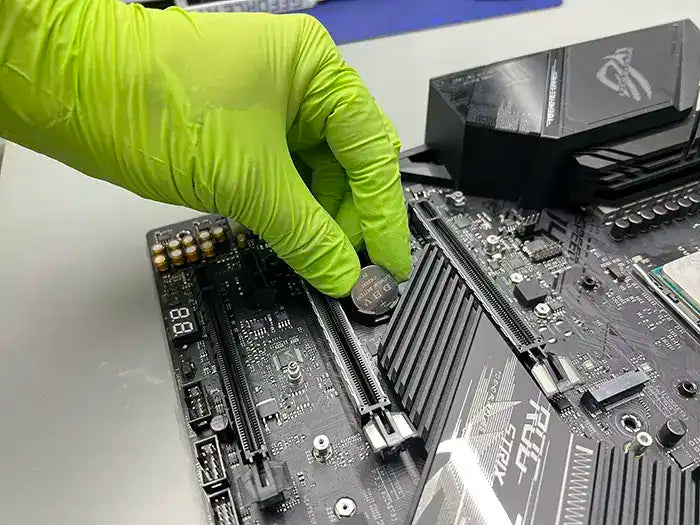
FAQ XMP vs EXPO for Gaming: RAM Profiles Explained
What is XMP vs EXPO for gaming?
Should I enable XMP for gaming?
Should I enable EXPO for gaming?
Does XMP or EXPO improve FPS?
Can XMP or EXPO cause crashes?
Why is my RAM not running at its advertised speed?
What should I do if XMP or EXPO isn't stable?
Gaming PC Not Working? Get Expert Diagnosis and Repair Options
If your gaming PC is experiencing issues after a CPU installation, upgrade, or hardware change, getting a proper diagnosis is the first step. Problems like bent CPU pins, motherboard socket damage, or BIOS incompatibility can prevent your system from booting.
At Prime Tech Support, we specialize in advanced gaming PC diagnostics and hardware-level repairs, including complex issues that other shops may not be able to resolve.
In Miami? Get Local Gaming PC Repair Service
Our team is ready to help you. We offer professional diagnostics and fast turnaround times for gaming PCs and high-performance systems.
Not in Miami? Use Our Nationwide Mail-In Repair Service
We provide secure nationwide mail-in repairs for gaming PCs, including CPU and motherboard issues. Whether you're dealing with bent pins, installation damage, or no-boot problems, our technicians can safely diagnose and repair your system.
We work with customers across the United States, offering clear communication, careful handling, and professional results.
Gaming PC Repair Services (Miami & Nationwide)


Reviews from our Gaming PC Customers in USA
Amazing work there very smart techs, anything you need done explain and your wish will be granted. I needed my power supply optimization, and the tech had no issues doing it. Thank you so much for the support. Click here to read the review on Google
 Joshua Sewell Miami, FL
I brought in my gaming PC for high CPU temperature issues. I was beyond pleased with the service I received. They kept me informed through out the diagnostic process and repair by sending pictures and also the diagnostic reports. The location is super clean and the staff and tech experts were super friendly, polite, and informative through out the process. I was informed they do gaming pc builds and offer a lot services and maintenance for gaming PCs, which is good to know and have in the miami area. Their services are reasonably priced. Highly recommend and will be coming back for any future needs. Click here to read the review on Yelp
 Jennifer Miami, FL
This is the place for any of your gaming pc build needs. I recently purchased a 4090 Founders edition graphics card and a LIAN LI XL case and needed them to transfer my components from my old case to my new case along with my new graphics card. I called Prime tech support, and they were excited to do the install Darian and Augustus greeted me when I arrived and finished the job the same day! Darian was the tech that did the installation, and he did an amazing job and offered to run some tests for me when I came to pick it up in person, to show my PC was running at a premium level. I recommend this place for any gaming pc needs and builds.
I am attaching pictures of my build.
thank you! Click Here to read th review on Google
