Why Is My Computer Stuck on the BIOS Screen? Causes, Diagnosis, and Fixes
When a computer powers on but gets stuck on the BIOS or UEFI screen, it can be confusing—especially when the system was working normally just hours earlier. You may see the motherboard manufacturer's logo, enter the BIOS setup automatically, or find that your computer repeatedly returns to the same firmware screen instead of loading Windows.
Unlike a computer that won't turn on or produces no display, a system stuck in BIOS has already completed at least part of its initial startup process. The problem may involve an undetected SSD, incorrect boot configuration, corrupted startup information, or a hardware issue preventing the computer from locating a valid operating system.
At Prime Tech Support, we approach BIOS-related startup failures by identifying whether the issue originates from firmware settings, storage detection, or the boot drive itself. This distinction matters because changing BIOS settings without understanding the underlying problem can complicate troubleshooting and potentially put important data at risk.
In this guide, we'll explain why computers get stuck on the BIOS screen, how to recognize common warning signs, which troubleshooting steps are reasonably safe to attempt, and when professional diagnosis is the better option.
Table of Contents
What Does It Mean When a Computer Is Stuck on the BIOS Screen?
When a computer gets stuck on the BIOS or UEFI screen, it means the system has powered on but cannot proceed normally through the startup process. Instead of loading Windows, the computer may remain on the motherboard manufacturer's logo, repeatedly open the BIOS setup utility, or display a message indicating that no bootable device was found.
The BIOS (Basic Input/Output System) or its modern replacement, UEFI (Unified Extensible Firmware Interface), is responsible for initializing essential hardware and locating the device containing the operating system. Before Windows can start, the firmware must recognize the necessary components and identify a valid boot path.
What Happens During a Normal Computer Startup?
When you press the power button, your computer performs several operations before Windows becomes available:
- Power initialization: The power supply delivers electricity to the motherboard and connected components.
- Hardware initialization: The BIOS or UEFI firmware initializes essential hardware, including the processor, memory, and storage controllers.
- Power-On Self-Test (POST): The system performs initial hardware checks to determine whether essential components are functioning well enough to continue startup.
- Boot device identification: The firmware searches for a valid boot entry or device according to its configuration.
- Operating system startup: The selected bootloader begins loading Windows.
If the computer cannot complete one of these stages, startup may stop before Windows loads. The exact behavior depends on the motherboard, firmware configuration, and underlying failure.
Does Getting Into BIOS Mean the Hardware Is Working?
Not necessarily. Being able to access the BIOS generally indicates that the processor, motherboard firmware, memory, and display hardware are functioning sufficiently to provide a firmware interface. However, it does not confirm that every component is healthy.
For example, a failing SSD may still appear in the BIOS but become unreliable when the computer attempts to read operating system files. Similarly, a motherboard may successfully open its firmware settings while experiencing problems with a storage connection or controller.
This is why technicians distinguish between a computer that successfully enters BIOS and one that successfully completes the entire boot process.
Stuck on the Manufacturer Logo vs. Stuck Inside BIOS
These two symptoms may look similar, but they can indicate different problems.
- Frozen on the manufacturer logo: The system may be delayed or stalled during hardware initialization, device detection, or the transition to the bootloader.
- Automatically entering BIOS setup: The firmware may be unable to locate a valid boot entry, may have lost certain settings, or may be responding to a hardware or configuration warning.
- Repeatedly returning to BIOS: The computer may recognize the storage device but fail to locate or launch a usable bootloader.
Recognizing these differences helps narrow down the problem before making changes to BIOS settings, reinstalling Windows, or replacing hardware unnecessarily.
Common Signs Your Computer Is Stuck on the BIOS Screen
A computer stuck on the BIOS screen does not always display an obvious error message. In some cases, the system repeatedly enters the firmware settings, while in others, it freezes at the manufacturer's logo or reports that no bootable device is available.
Identifying exactly what happens during startup is one of the most useful first steps in diagnosing the problem. Different symptoms can point toward storage detection failures, incorrect boot settings, or hardware initialization issues.
1. Computer Automatically Opens BIOS Instead of Windows
One of the most common symptoms is a computer that powers on normally but opens the BIOS or UEFI setup utility without the user pressing any key.
This can happen when the firmware cannot locate a valid Windows boot entry, the boot drive is disconnected or undetected, or the boot configuration has changed. Some motherboards also enter BIOS automatically after detecting a configuration or hardware warning.
2. Computer Freezes on the Motherboard Manufacturer's Logo
Another symptom is a computer that remains on the ASUS, MSI, Gigabyte, Dell, HP, Lenovo, or other manufacturer logo without progressing to Windows.
Depending on where startup stops, the system may be experiencing delayed hardware initialization, problems detecting a connected device, or difficulty transferring control to the operating system's bootloader.
A frozen manufacturer logo does not automatically mean the motherboard has failed. Storage devices, USB peripherals, and other connected hardware can sometimes interfere with startup.
3. BIOS Displays "No Bootable Device" or a Similar Error
Messages such as "No Bootable Device," "Boot Device Not Found," or "Reboot and Select Proper Boot Device" indicate that the firmware could not find a usable boot target under its current configuration.
Possible causes include an undetected SSD, incorrect boot priority, a missing Windows Boot Manager entry, or damaged boot information.
Importantly, this message does not prove that the storage drive has physically failed. Further diagnosis is needed before replacing the drive or reinstalling Windows.
4. SSD or Hard Drive Is Missing From BIOS
If the computer's primary storage device does not appear in the BIOS storage information, Windows may be unable to start because the firmware cannot communicate with the drive.
This may be caused by a loose SATA connection, an improperly seated M.2 SSD, a storage controller configuration issue, or a failing drive.
However, some UEFI interfaces display physical storage devices separately from boot entries. A drive missing from the boot priority list is not necessarily missing from hardware detection.
5. BIOS Settings Keep Resetting After Shutdown
Some users notice that the computer repeatedly loses its date, time, boot priority, or other firmware settings after being disconnected from power.
On systems that use a replaceable CMOS/RTC battery, a weak battery may contribute to these symptoms. Firmware configuration problems or motherboard faults are other possibilities.
Repeatedly resetting settings can prevent the computer from consistently selecting the correct Windows boot entry.
Quick Diagnosis: BIOS Startup Symptoms and Possible Causes
| Startup Symptom | Possible Cause | What to Check First |
|---|---|---|
| Computer opens BIOS automatically | Missing boot entry, incorrect settings, or firmware warning | Windows Boot Manager and firmware messages |
| Computer freezes on manufacturer logo | Hardware initialization or device detection problem | Connected USB devices and startup behavior |
| No bootable device found | Invalid boot configuration or unavailable boot drive | Boot entries and physical drive detection |
| SSD or HDD not detected | Connection, controller, or storage device issue | BIOS storage information |
| BIOS settings reset repeatedly | Weak CMOS battery or firmware configuration issue | System clock and saved BIOS settings |
These symptoms provide useful diagnostic clues, but they are not definitive proof of a particular failure. A proper diagnosis considers the computer's hardware configuration, recent changes, and whether the boot drive is detected consistently.
Why Does My Computer Keep Booting Into BIOS?
When a computer repeatedly boots into BIOS instead of Windows, the firmware may be unable to identify a valid operating system boot path or may be responding to a hardware or configuration problem. Although this behavior often points toward the storage system, several different issues can interrupt the startup process.
Understanding these causes is important because a computer that repeatedly enters BIOS does not necessarily need a new SSD, motherboard, or Windows installation. The correct repair depends on identifying which part of the startup process is failing.
Missing or Incorrect Windows Boot Manager Entry
On most modern Windows computers using UEFI, Windows Boot Manager is responsible for launching the operating system from the appropriate EFI system partition.
If the Windows Boot Manager entry is missing, points to an unavailable drive, or is no longer selected as the primary boot option, the firmware may return to BIOS instead of starting Windows.
This can happen after changes to firmware settings, storage replacement, drive cloning, or modifications to the computer's boot configuration.
Storage Drive Detection or Communication Problems
The BIOS or UEFI firmware must be able to communicate with the storage device containing Windows. If an SSD or hard drive is not detected reliably, the firmware may have no valid device from which to boot.
Possible causes include a loose SATA data cable, an unstable power connection, an improperly seated M.2 SSD, or a storage device developing hardware faults.
In some cases, the drive may appear intermittently in BIOS, making the problem seem unpredictable. This behavior requires careful diagnosis because repeatedly attempting repairs on an unstable drive can increase the risk of data loss.
Incorrect UEFI, Legacy Boot, or Storage Controller Configuration
Firmware configuration changes can prevent a previously working Windows installation from starting.
For example, switching between UEFI and Legacy/CSM boot modes may prevent the firmware from finding the expected bootloader. Changes to storage controller settings, such as AHCI, RAID, or Intel VMD configurations, can also interfere with access to the Windows installation.
These settings are not interchangeable, and changing them without understanding how Windows was originally installed may create additional startup problems.
Corrupted or Missing Boot Information
Even when the SSD or hard drive is physically detected, the firmware may be unable to locate or launch the Windows bootloader if important startup information has been damaged.
This may occur after an interrupted system update, disk partition changes, unsuccessful drive cloning, or file system corruption affecting the EFI system partition.
However, a damaged Windows installation does not always cause the computer to enter BIOS. Depending on the failure, the system may instead display a Windows recovery screen or boot-related error.
Firmware Settings Reset or Hardware Configuration Changes
BIOS settings may change after a firmware update, CMOS reset, motherboard maintenance, or certain hardware modifications.
If the reset removes a required boot entry, changes the boot mode, or restores incompatible storage settings, the computer may stop loading Windows and return to the firmware interface.
On some systems, a failing CMOS/RTC battery can contribute to repeated configuration loss, although this is less common on newer computers with different firmware and battery designs.
Motherboard or Connected Hardware Issues
Although storage-related problems are frequent causes, other hardware can sometimes interrupt the startup process.
Faulty USB peripherals, unstable memory settings, storage controller faults, or motherboard problems may delay hardware initialization or prevent the firmware from completing startup normally.
These possibilities become more relevant when the computer freezes before boot device selection, behaves inconsistently after hardware changes, or displays firmware warnings.
Technician's Tip: Before changing BIOS settings, check whether the storage drive is detected and whether Windows Boot Manager appears in the boot options. If the drive contains important files, avoid formatting, reinstalling Windows, or repeatedly attempting boot repairs until the drive's condition has been evaluated. These actions can complicate recovery when storage hardware is failing.
Because several different problems can produce similar BIOS startup behavior, the next diagnostic priority is determining whether the computer can consistently detect its primary storage device. This helps separate physical storage failures from boot configuration problems.
BIOS Not Detecting Your SSD or Hard Drive
One of the most important things to check when a computer is stuck on the BIOS screen is whether its SSD or hard drive is being detected. If the firmware cannot communicate with the storage device containing Windows, the system may be unable to locate the operating system and continue startup.
However, a drive that does not appear in the boot priority list is not necessarily defective. Modern UEFI systems often display physical storage devices and operating system boot entries in separate menus. Understanding this difference can prevent unnecessary drive replacement or Windows reinstallation.
How to Check Whether BIOS Detects Your Storage Drive
Most motherboard manufacturers provide a section within BIOS or UEFI that displays connected storage devices. Depending on the computer, this information may appear under Storage Configuration, SATA Information, NVMe Configuration, System Information, or a similarly named menu.
To perform an initial check:
- Enter the BIOS or UEFI setup utility using the appropriate startup key, commonly Delete, F2, F10, or Esc, depending on the manufacturer.
- Locate the storage information or device detection section.
- Look for the model number of the installed SSD or hard drive.
- Check whether the drive is detected consistently after a normal restart.
- Review the boot options separately to determine whether Windows Boot Manager is available.
If the drive appears in the storage information but Windows Boot Manager is missing, the problem may involve boot configuration or startup information rather than physical drive detection.
Why a SATA SSD or Hard Drive May Not Appear in BIOS
SATA drives depend on both a data connection to the motherboard and a power connection from the power supply.
A loose SATA data cable, damaged connector, unstable power connection, or faulty motherboard SATA port can prevent the firmware from detecting the drive correctly.
In desktop computers, technicians may inspect the connections and test with a known-good cable or compatible port. These checks should be performed only after the system has been powered off and disconnected from electricity.
If the drive remains undetected after connection issues have been ruled out, the storage device itself or the motherboard's storage controller may require further testing.
Why an NVMe M.2 SSD May Not Be Detected
NVMe SSDs connect through an M.2 slot and communicate using PCIe rather than traditional SATA data cables. This means their detection problems can have different causes.
An NVMe drive may not appear because it is improperly seated, the M.2 slot does not support the drive's interface, the motherboard has specific lane-sharing limitations, or the storage controller configuration is incompatible with the current setup.
Some computers also use Intel VMD or RAID configurations that change how storage devices are presented to the operating system and firmware.
Before assuming an NVMe SSD has failed, technicians verify the motherboard's slot specifications, firmware storage information, and compatibility with the installed drive.
Intermittent SSD Detection Can Be a Warning Sign
A storage drive that appears in BIOS during one startup but disappears during another deserves particular attention.
Intermittent detection may result from unstable connections, electrical problems, firmware compatibility issues, overheating, or developing drive faults.
When important files are stored on the affected drive, repeated restarts, unnecessary write operations, and aggressive repair attempts should be avoided until its condition has been assessed.
In professional diagnostics, the priority is often to determine whether the drive is stable enough for controlled data backup or whether specialized recovery procedures are more appropriate.
Detected SSD but No Windows Boot Manager
If BIOS recognizes the physical SSD but does not display Windows Boot Manager, the firmware may be unable to locate a valid UEFI boot entry.
Possible explanations include a missing firmware boot entry, damaged EFI system partition, incorrect boot mode, or changes made during drive cloning or operating system installation.
Importantly, a detected SSD does not guarantee that the drive is healthy or that the Windows installation is intact. Storage health and boot configuration must be evaluated separately.
This distinction helps technicians avoid replacing a functional drive when the actual problem is related to firmware configuration or damaged boot information.
When Storage Detection Problems Require Professional Diagnosis
If your SSD or hard drive repeatedly disappears from BIOS, contains important files, or remains undetected after basic external checks, professional diagnosis is advisable before attempting additional repairs.
At Prime Tech Support, storage-related startup problems are approached by examining drive detection, connection integrity, firmware configuration, and the possibility of underlying hardware failure. The goal is to identify the cause while minimizing unnecessary changes to the customer's existing data.
For more information about diagnosing hardware and startup-related issues, explore our computer repair and troubleshooting guides.
Incorrect BIOS Boot Settings and Boot Priority
Even when your computer detects its SSD or hard drive correctly, incorrect BIOS or UEFI settings can prevent Windows from starting. The firmware must identify the appropriate boot entry and use settings compatible with the way the operating system was originally installed.
These problems sometimes appear after a BIOS update, motherboard reset, storage upgrade, or hardware replacement. In other cases, a configuration change may occur while troubleshooting an unrelated computer issue.
Windows Boot Manager Is Missing or Not Selected
On most modern Windows computers using UEFI, the preferred boot option is typically labeled Windows Boot Manager, sometimes followed by the model of the storage device.
Windows Boot Manager directs the firmware toward the files needed to begin loading the operating system. If another device is selected first, or the correct entry is missing, the computer may fail to start Windows.
To inspect the boot configuration:
- Enter BIOS or UEFI setup and locate the Boot or Boot Priority section.
- Check whether Windows Boot Manager appears among the available boot options.
- Confirm that the entry corresponds to the intended Windows installation.
- If the correct entry exists, select it as the primary boot option and save the configuration.
- Restart the computer to determine whether Windows loads normally.
If Windows Boot Manager is missing entirely, changing the boot order alone may not resolve the issue. Further investigation may be needed to determine whether the EFI boot information or firmware entry is damaged.
UEFI vs. Legacy/CSM Boot Mode
UEFI and Legacy BIOS are different methods of starting an operating system. Most modern Windows 11 computers use UEFI with a GPT-partitioned system drive, while some older Windows installations were configured using Legacy BIOS and MBR partitioning.
If the firmware is switched to a boot mode that does not match the Windows installation, the computer may no longer recognize a valid boot path.
For example, enabling Legacy/CSM mode on a system configured for UEFI startup may prevent the expected Windows Boot Manager entry from being used.
Rather than switching between these modes randomly, it is safer to identify the original installation configuration before making changes.
Can Secure Boot Prevent Windows From Starting?
Secure Boot is a UEFI security feature designed to help prevent unauthorized boot software from running during startup.
On a properly configured Windows system, Secure Boot normally does not interfere with everyday startup. However, changes to firmware security settings, bootloaders, or certain operating system configurations can cause boot verification problems.
Disabling Secure Boot should not be treated as a universal solution for a computer stuck in BIOS. It may reduce startup security without addressing the actual problem.
On computers using BitLocker or device encryption, firmware security changes can also trigger a recovery-key prompt. Make sure the appropriate recovery key is available before changing security-related settings.
AHCI, RAID, and Intel VMD Configuration Problems
Storage controller settings determine how the motherboard presents certain storage devices to the operating system. Depending on the computer, these settings may include AHCI, RAID, Intel Rapid Storage Technology (RST), or Intel Volume Management Device (VMD).
Changing these settings after Windows has already been installed can prevent the operating system from accessing its boot drive correctly.
For example, a Windows installation configured with a particular storage controller driver may fail to start if the firmware is changed to a different controller mode without preparing Windows for that change.
Some systems will display a Windows startup error rather than return directly to BIOS. The behavior depends on whether the firmware can still locate and launch the bootloader.
Important: Do not randomly switch between AHCI, RAID, or VMD settings while troubleshooting. Record the original configuration and verify the system's storage requirements before making modifications.
When Resetting BIOS to Defaults Can Make Things Worse
Restoring BIOS settings to factory defaults may seem like an easy troubleshooting step, but it is not always appropriate.
A reset can change boot priority, storage controller settings, memory profiles, and other configuration options that were required for the computer's existing hardware or Windows installation.
On systems with custom configurations, these changes may introduce new startup problems rather than resolve the original issue.
Before resetting firmware settings, document the current configuration and consider whether the problem began after a specific hardware change, firmware update, or power-related event.
If the storage device is consistently detected but the correct boot configuration cannot be restored, further diagnosis may be necessary to distinguish a firmware configuration issue from damaged Windows boot information.
Can a CMOS Battery Cause a Computer to Get Stuck in BIOS?
Yes, a weak or depleted CMOS battery can sometimes cause a computer to repeatedly enter BIOS instead of loading Windows. However, this typically happens when the system loses important firmware settings, displays a configuration warning, or requires the user to confirm BIOS settings before startup can continue.
The CMOS or real-time clock (RTC) battery helps maintain the system clock and certain motherboard functions when the computer is disconnected from external power. On older systems, it also played a more direct role in preserving BIOS configuration data. Modern UEFI motherboards commonly store firmware settings in nonvolatile memory, so a depleted battery does not necessarily erase every setting.
Common Signs of a Weak CMOS Battery
A failing CMOS battery may produce symptoms that are noticeably different from those caused by a damaged Windows installation or an undetected SSD.
- Incorrect date and time: The system clock repeatedly resets, especially after the computer has been unplugged.
- CMOS checksum or RTC warnings: The motherboard displays an error indicating a clock or configuration problem.
- Repeated BIOS setup prompts: The computer asks the user to enter firmware settings or confirm a configuration before continuing.
- Configuration changes after power loss: Certain motherboard settings may return to defaults after the system has been disconnected from power.
- Startup problems following a reset: If required boot or storage settings change, Windows may no longer start normally.
These symptoms are useful diagnostic clues, but they do not prove that the CMOS battery is defective. Firmware corruption, motherboard problems, or other electrical faults can sometimes produce similar behavior.
Can Replacing the CMOS Battery Fix the Problem?
If a desktop computer repeatedly loses its system clock or displays RTC-related warnings, replacing a depleted CMOS battery may resolve those specific symptoms.
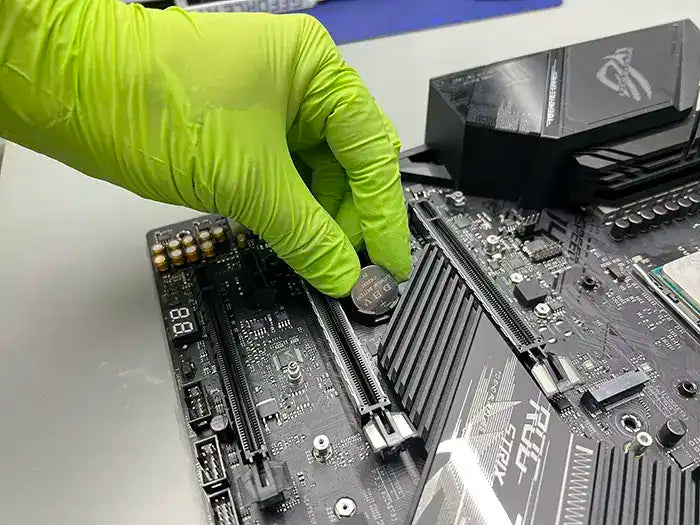
Many desktop motherboards use a CR2032 coin-cell battery, although the correct type should always be confirmed using the manufacturer's documentation.
Before replacing the battery, the computer should be shut down, disconnected from power, and handled according to the manufacturer's service instructions. The existing firmware settings should also be documented because battery replacement may require the configuration to be checked afterward.
For laptops and compact computers, RTC battery designs vary considerably. Some use internal rechargeable batteries or integrated assemblies that are not intended for routine user replacement.
Why a New CMOS Battery May Not Solve a BIOS Boot Loop
If the SSD is failing, Windows Boot Manager is missing, or the firmware cannot communicate with the boot drive, installing a new CMOS battery will not correct the underlying problem.
Similarly, a computer that consistently retains its date, time, and firmware configuration may have no battery-related issue at all.
Replacing the battery without checking the actual startup symptoms can delay the diagnosis of more serious storage or motherboard problems.
How Technicians Confirm a CMOS Battery Problem
Professional diagnosis involves checking whether the computer loses its clock or configuration after being disconnected from power, reviewing firmware warnings, and examining the motherboard's battery arrangement.
Where appropriate, a technician may measure the voltage of a removable RTC battery and compare it with the manufacturer's specifications. The battery's condition is then evaluated alongside storage detection, boot configuration, and other startup behavior.
At Prime Tech Support, the objective is to identify whether a battery-related configuration issue is actually responsible for the startup failure rather than replacing components based on symptoms alone.
If the computer continues returning to BIOS after its clock and firmware settings have been verified, the next step is to investigate other hardware components that may be interfering with startup.
Hardware Problems That Can Cause BIOS Startup Failures
Although incorrect boot settings and storage detection problems are common reasons a computer repeatedly enters BIOS, other hardware issues can interrupt the startup process. A computer may successfully power on and display its manufacturer's logo while still experiencing problems initializing connected components.
Hardware-related BIOS failures can be more difficult to identify because the symptoms may change between restarts. Some computers freeze during the Power-On Self-Test (POST), while others enter BIOS automatically after detecting an unstable configuration or hardware warning.
RAM Instability and Memory Initialization Problems
System memory plays an essential role during startup. Before Windows can load, the motherboard must initialize the installed RAM and establish stable communication with the processor.
Faulty memory modules, incompatible RAM configurations, or unstable memory overclocking profiles can prevent the system from completing POST successfully.
On gaming desktops and performance-oriented computers, XMP or EXPO memory profiles may occasionally cause startup instability, particularly after hardware upgrades or BIOS updates.
However, severe RAM failures often prevent the computer from reaching BIOS at all. If the firmware interface remains consistently accessible, memory problems are possible but should not automatically be considered the primary cause.
Motherboard and Storage Controller Failures
The motherboard provides the connections and controllers needed for the processor, memory, storage devices, and other components to communicate.
A damaged SATA port, malfunctioning M.2 connection, unstable power delivery circuit, or motherboard controller fault may interfere with storage detection or hardware initialization.
For example, an SSD that works correctly in another compatible system but repeatedly disappears from a particular motherboard may indicate a connection, compatibility, or controller problem rather than a defective drive.
Professional testing may involve examining motherboard connections, checking firmware behavior, and comparing results with known-good compatible components.
USB Devices and External Peripherals Interfering With Startup
External devices can sometimes prevent a computer from progressing normally through startup.
USB flash drives, external hard drives, docking stations, and certain malfunctioning peripherals may introduce additional boot options or interfere with device initialization.
If the firmware attempts to start from an external device that does not contain a valid operating system, it may display a boot error or continue to another configured boot option.
As a simple initial check, disconnect unnecessary external devices while the computer is powered off, leaving only the essential keyboard, mouse, and display connections. Then restart the system to see whether its behavior changes.
If Windows loads normally afterward, reconnect peripherals individually to identify whether a particular device contributes to the issue.
Graphics Card and PCIe Device Initialization Issues
Dedicated graphics cards and other PCIe expansion devices must be initialized during startup. A malfunctioning expansion card, incompatible firmware configuration, or unstable PCIe connection can sometimes cause POST delays or startup freezes.
These problems are more likely to appear as a frozen manufacturer logo, diagnostic LED warning, or failure to complete POST than as a computer that consistently opens BIOS because Windows Boot Manager is missing.
When a system displays no image at all, the diagnostic process is different and should focus on display output and hardware initialization rather than assuming the computer is stuck inside BIOS.
Power Supply Instability During Hardware Initialization
A computer may receive enough power to turn on and display the BIOS interface while still experiencing electrical instability under certain conditions.
Unstable power delivery can affect connected storage devices, motherboard components, or expansion hardware, potentially contributing to inconsistent startup behavior.
However, a power supply problem should not be diagnosed solely because a computer repeatedly enters BIOS. Technicians must look for supporting evidence, such as unexpected shutdowns, intermittent device detection, or abnormal electrical measurements.
Power supply testing should be performed with appropriate equipment and safety procedures. Users should never open a power supply enclosure because internal capacitors can retain dangerous electrical energy even after the unit is unplugged.
How to Distinguish Hardware Problems From BIOS Configuration Issues
One of the most useful diagnostic distinctions is whether the computer behaves consistently.
If the system reliably enters BIOS, detects all installed hardware, and displays the same boot configuration on every startup, a boot entry or firmware configuration problem may be more likely.
By contrast, intermittent storage detection, changing POST warnings, unexplained freezes, or inconsistent hardware recognition may justify deeper hardware testing.
These patterns do not establish a definitive diagnosis, but they help determine whether the next step should involve firmware configuration, storage evaluation, or component-level troubleshooting.
Because unnecessary hardware replacement can increase repair costs without resolving the original failure, a systematic diagnostic process is generally more effective than replacing parts based on a single symptom.
How to Fix a Computer Stuck on the BIOS Screen
If your computer keeps entering BIOS instead of loading Windows, the safest approach is to identify what is preventing startup before changing firmware settings or attempting operating system repairs. Some BIOS-related problems can be resolved with basic checks, while others require storage testing or more advanced diagnostics.
Follow these troubleshooting steps in order, starting with the least invasive options.
Step 1: Disconnect Unnecessary USB Devices
Shut down the computer and disconnect nonessential USB devices, including external hard drives, flash drives, docking stations, and other accessories.
Leave the keyboard, mouse, and monitor connected, then restart the computer.
External storage devices can sometimes affect boot priority, while malfunctioning peripherals may interfere with hardware initialization. If Windows starts normally after disconnecting these devices, reconnect them individually to identify the possible cause.
Step 2: Check for BIOS Error Messages
If the computer returns to BIOS, look for warnings before changing any settings. Messages about missing boot devices, CMOS configuration errors, CPU fan detection, or hardware initialization may provide valuable diagnostic information.
Record the exact error message or take a photograph of the screen. This information can help distinguish a boot configuration problem from a hardware issue.
Do not repeatedly dismiss hardware warnings without determining why they appear, particularly when they involve cooling or electrical problems.
Step 3: Confirm That BIOS Detects the SSD or Hard Drive
Open the BIOS storage information section and check whether the drive containing Windows is recognized.
Depending on the manufacturer, this information may appear under SATA Configuration, NVMe Configuration, Storage Information, or System Information.
- Drive detected: Continue by checking whether the correct Windows boot entry is available.
- Drive not detected: Avoid changing unrelated firmware settings. The problem may involve the drive, its connection, or the storage controller.
- Drive detected intermittently: Stop unnecessary restart attempts if important data is stored on the device, as instability may indicate a developing hardware problem.
Remember that a drive missing from the boot priority list may still be visible in the physical storage information menu.
Step 4: Verify Windows Boot Manager and Boot Priority
If the storage drive is detected, locate the Boot Priority or Boot Options section.
On most modern Windows systems configured for UEFI startup, the correct boot entry is labeled Windows Boot Manager.
If the appropriate Windows Boot Manager entry is present but another device is selected first, set the correct entry as the primary boot option, save the change, and restart.
If Windows Boot Manager is missing, do not assume that manually selecting the SSD will fix the problem. The EFI boot information or firmware boot entry may require further diagnosis.
Step 5: Review Recent BIOS or Hardware Changes
Consider whether the problem began immediately after a BIOS update, motherboard reset, storage upgrade, RAM replacement, or other hardware modification.
If a known setting was changed, compare the current configuration with the manufacturer's documentation or a previously recorded working configuration.
Avoid randomly switching UEFI/Legacy boot modes, Secure Boot, AHCI, RAID, or Intel VMD settings. These changes can create additional startup problems and may trigger BitLocker recovery.
Important Before Continuing: If your computer contains important files, do not format the drive, delete partitions, reinstall Windows, or initialize an unrecognized disk as a troubleshooting shortcut. If BitLocker or device encryption is enabled, locate your recovery key before making firmware or storage configuration changes. Protecting existing data should take priority over attempting an immediate repair.
Step 6: Check for Repeated BIOS Settings Loss
If the computer repeatedly loses its date, time, or firmware configuration after being disconnected from power, investigate a possible CMOS/RTC battery or motherboard-related problem.
On compatible desktop systems, a depleted removable RTC battery may require replacement. However, battery replacement should be based on supporting symptoms rather than performed automatically.
After correcting a confirmed RTC issue, verify that the firmware retains its settings and that the original boot configuration remains intact.
Step 7: Use Windows Recovery Only When Appropriate
If the SSD is consistently detected, the firmware configuration is correct, and Windows still cannot start, the issue may involve damaged boot information or the operating system itself.
Windows Recovery Environment provides tools such as Startup Repair that may help with certain startup problems. However, these tools are not suitable for every failure, particularly when the storage device is unstable or physically damaged.
Before attempting boot repairs, confirm that important data is backed up or that the drive's condition has been evaluated. Recovery procedures may also require a BitLocker recovery key.
If the system cannot locate the Windows installation or the recovery tools report storage-related errors, further diagnosis is preferable to repeatedly running repair commands.
Step 8: Stop Troubleshooting When Hardware Failure Is Suspected
Professional diagnosis is advisable if the computer continues returning to BIOS despite basic checks, especially when the boot drive disappears intermittently, the motherboard displays hardware warnings, or the system freezes during initialization.
A technician can evaluate storage detection, firmware configuration, motherboard connections, and hardware stability using appropriate diagnostic procedures.
At Prime Tech Support, identifying the underlying cause is the priority before recommending drive replacement, Windows repair, or other corrective work.
The goal is not simply to make the computer start again, but to restore reliable operation while minimizing unnecessary repairs and protecting the customer's data whenever possible.
How Professional Technicians Diagnose BIOS Startup Problems
When a computer repeatedly enters BIOS or freezes before Windows loads, professional diagnosis involves more than changing boot settings or replacing the storage drive. The objective is to identify exactly where the startup process fails and determine whether the underlying cause involves firmware configuration, hardware communication, or operating system boot information.
At Prime Tech Support, a systematic diagnostic approach helps distinguish problems that produce similar symptoms while reducing the risk of unnecessary component replacement or data loss.
1. Reviewing Startup Behavior and POST Results
The diagnostic process begins by observing how the computer behaves from the moment it powers on. Technicians look for motherboard warning indicators, POST diagnostic codes, error messages, and the point at which startup stops progressing.
Some motherboards provide diagnostic LEDs for the CPU, RAM, graphics card, and boot device. Others use beep codes or numerical POST displays to identify initialization problems.
These indicators can help narrow down the affected hardware, although their meaning varies by motherboard manufacturer and model.
2. Verifying Storage Detection and Drive Health
Technicians check whether the BIOS consistently recognizes the installed SSD or hard drive and whether the expected Windows Boot Manager entry is available.
When appropriate, they may inspect SATA connections, M.2 installation, storage controller configuration, and the drive's reported health information.
A storage device that is detected by BIOS is not necessarily healthy. Additional testing may be needed to determine whether the drive can reliably communicate and read data.
If signs of physical storage failure are present, protecting recoverable data takes priority over attempting repeated startup repairs or unnecessary write operations.
3. Testing Hardware With Known-Good Components
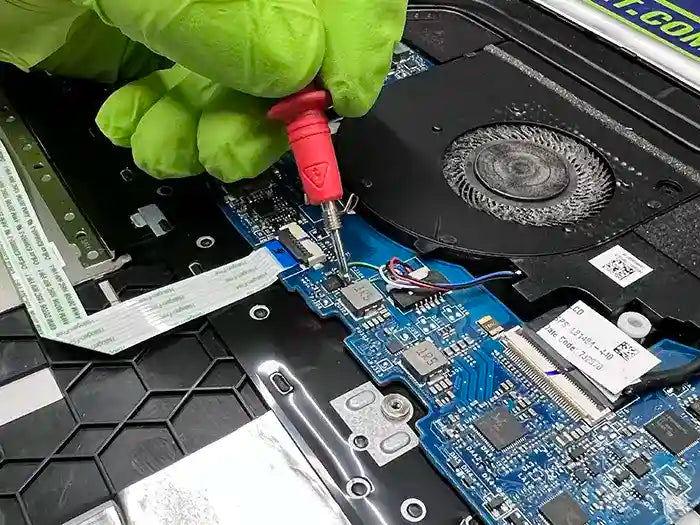
When the symptoms suggest a hardware-related problem, technicians may isolate components and compare results using compatible, known-good parts.
Depending on the system, this may involve testing memory modules, inspecting motherboard storage connections, evaluating power delivery, or checking whether a connected peripheral is interfering with initialization.
These tests help determine whether the problem follows a particular component or remains associated with the original motherboard or configuration.
4. Evaluating BIOS and UEFI Configuration
Once hardware detection has been assessed, technicians review the firmware configuration, including boot priority, UEFI compatibility, storage controller settings, and available boot entries.
Rather than resetting every setting or randomly switching operating modes, the technician compares the current configuration with the system's hardware requirements and the expected Windows installation.
This is especially important on systems using RAID, Intel VMD, BitLocker, or custom storage configurations, where inappropriate firmware changes can introduce additional problems.
5. Distinguishing Windows Boot Corruption From Hardware Failure
If the storage drive is stable and the firmware configuration appears correct, the next step may involve examining the Windows boot environment.
Technicians may evaluate the EFI system partition, boot configuration data, and available recovery options to determine whether the operating system can be repaired without reinstalling Windows.
However, Windows repair procedures should not be used as a substitute for storage diagnostics when there are signs of a failing SSD or hard drive.
6. Confirming the Repair Through Startup Testing
After correcting the identified issue, the computer should be tested through multiple normal startup and shutdown cycles.
Technicians verify that the boot drive remains consistently detected, firmware settings are retained, and Windows loads without recurring errors.
When appropriate, additional stability testing can help confirm that the original problem has been resolved rather than temporarily bypassed.
This structured approach is particularly valuable when the computer contains important files, has undergone recent hardware changes, or experiences intermittent startup failures that are difficult to reproduce.
When Should You Seek Professional Computer Repair?
Some BIOS startup problems can be resolved by correcting boot priority or disconnecting a problematic external device. However, when a computer repeatedly returns to BIOS, fails to detect its storage drive, or freezes during hardware initialization, additional troubleshooting may require professional diagnostic equipment and experience.
Continuing to change firmware settings without identifying the underlying cause can make the problem more difficult to diagnose, particularly on systems using BitLocker encryption, RAID storage, or specialized motherboard configurations.
Warning Signs That Professional Diagnosis Is Recommended
Consider seeking professional computer repair if you experience any of the following:
- Your SSD or hard drive disappears from BIOS: Intermittent storage detection may indicate a connection, controller, or drive-related problem that requires careful testing.
- The computer repeatedly returns to BIOS: The correct boot entry may be missing, or the firmware may be unable to locate a usable operating system.
- The system freezes during POST: Memory instability, motherboard faults, or connected hardware may be preventing normal initialization.
- BIOS settings repeatedly reset: A CMOS/RTC battery issue, firmware problem, or motherboard fault may require investigation.
- The problem began after a BIOS update or hardware upgrade: Firmware compatibility or configuration changes may need to be evaluated.
- Important files are stored on the computer: If storage failure is suspected, preserving recoverable data should take priority over repeated repair attempts.
Why Accurate Diagnosis Matters Before Replacing Parts
A computer that cannot boot into Windows does not automatically need a new motherboard, SSD, or operating system installation. Different failures can produce nearly identical startup symptoms.
For example, a missing Windows Boot Manager entry may be caused by damaged boot information rather than a defective storage drive. Likewise, an SSD that disappears intermittently may require connection or controller testing before replacement is recommended.
Professional diagnosis helps identify the actual source of the problem and determine which repair is appropriate, potentially avoiding unnecessary expenses and additional downtime.
Computer Startup Diagnostics at Prime Tech Support
At Prime Tech Support, we help customers investigate computers that power on but fail to complete startup, including systems that repeatedly enter BIOS, display boot device errors, or experience storage detection problems.
Our diagnostic approach focuses on identifying the underlying issue before recommending firmware corrections, hardware repairs, or operating system recovery procedures.
If your computer continues getting stuck in BIOS, you can explore our computer repair resources or contact Prime Tech Support to discuss the symptoms and available diagnostic options.
How to Prevent BIOS and Startup Problems
Not every BIOS or UEFI startup failure can be prevented. Storage devices can fail unexpectedly, motherboard components can develop faults, and firmware problems may occur without obvious warning. However, maintaining a stable hardware configuration and following safe maintenance practices can reduce the risk of avoidable startup issues.
Keep BIOS and UEFI Firmware Updates Controlled
Motherboard manufacturers occasionally release firmware updates to improve hardware compatibility, address security vulnerabilities, and correct known stability problems.
However, updating BIOS should not be treated as routine troubleshooting for every startup issue. An interrupted or incompatible firmware update can leave a computer unable to start normally.
Before updating firmware, verify the exact motherboard or computer model, review the manufacturer's release notes, and follow the official update procedure. Avoid interrupting power during the process.
Monitor SSD and Hard Drive Health
Storage devices can develop reliability problems before they stop functioning entirely. Unusual delays, intermittent drive detection, read errors, or repeated storage-related warnings may indicate that further evaluation is needed.
Where supported, storage health information such as SMART or NVMe health data can provide useful diagnostic indicators. However, a drive reporting normal health is not guaranteed to be free of problems.
Maintaining current backups is especially important because storage failure can occur without sufficient warning to recover files through ordinary methods.
Avoid Unnecessary BIOS Configuration Changes
Changing boot mode, storage controller settings, or firmware security options without understanding their purpose can prevent an otherwise functional Windows installation from loading.
Before modifying important settings, document the original configuration and confirm that the proposed change is compatible with the operating system and installed hardware.
On systems using BitLocker or device encryption, ensure the recovery key is available before making firmware or hardware changes that could trigger recovery.
Use Compatible Hardware During Upgrades
Storage and memory upgrades should be planned around the motherboard's supported interfaces, specifications, and firmware requirements.
For example, not every M.2 slot supports both SATA and NVMe drives, and some motherboard configurations share PCIe lanes or disable certain ports when specific slots are populated.
Checking compatibility before installing new hardware can help prevent device detection problems and unexpected startup failures.
Maintain Reliable Power and Cooling
Electrical instability and overheating can contribute to hardware problems that affect overall system reliability.
Use an appropriately rated power supply, maintain adequate ventilation, and address unusual shutdowns or hardware temperature warnings rather than ignoring them.
A quality surge protector or an appropriately selected uninterruptible power supply (UPS) may also help protect against certain power disturbances, although neither eliminates every electrical risk.
Keep Reliable Backups of Important Files
One of the most effective ways to reduce the impact of an unexpected startup failure is to maintain a reliable backup strategy.
Important documents, business files, photographs, and other irreplaceable data should be backed up to a separate storage device or trusted cloud service.
Whenever possible, maintain more than one backup copy and periodically verify that files can be restored successfully.
A backup will not prevent a BIOS startup problem, but it can significantly reduce the consequences if a storage device fails or Windows becomes inaccessible.
By combining careful firmware management, compatible hardware upgrades, storage monitoring, and dependable backups, computer owners can reduce avoidable startup problems and make unexpected failures easier to address.
Final Thoughts: Getting Your Computer Past the BIOS Screen
When a computer repeatedly enters BIOS instead of loading Windows, the problem is not always as serious as it first appears. Incorrect boot priority, missing Windows Boot Manager entries, firmware configuration changes, and storage detection problems can all prevent a system from completing startup.
The most important step is determining whether the BIOS recognizes the storage drive and whether a valid Windows boot entry is available. These two checks help distinguish configuration problems from potential hardware failures.
While some issues can be resolved through basic troubleshooting, others require more careful diagnosis. An SSD that disappears intermittently, repeated POST failures, or unexpected changes to firmware settings may indicate an underlying problem that should be investigated before replacing components or reinstalling Windows.
A computer stuck in BIOS does not automatically need a new motherboard, SSD, or Windows installation. Accurate diagnosis helps identify the appropriate repair while reducing unnecessary expenses and protecting important data.
Need Help With a Computer That Keeps Booting Into BIOS?
If your desktop or laptop repeatedly opens BIOS, cannot detect its boot drive, or refuses to load Windows, Prime Tech Support can help investigate the underlying cause.
Our computer repair services focus on diagnosing startup failures, identifying hardware and firmware problems, and recommending appropriate solutions based on the condition of the system.
Whether the issue involves storage detection, BIOS configuration, or a more complex hardware failure, identifying the cause before attempting major repairs is the safest approach.
Computer Stuck in BIOS? Get Professional Help
Don't risk unnecessary hardware replacement or data loss. Let Prime Tech Support help diagnose why your computer won't boot into Windows and determine the appropriate next steps.
Contact Prime Tech Support
PROFESSIONAL SUPPORT
Computer Repairs
Fast tech support for Computer Repairs. We exceed customer expectations and ensure satisfaction.

Computer Repairs Blog by Techs in Miami
View all-

Does your computer keep opening BIOS instead of loading Windows? Learn why BIOS startup problems happen, how to identify SSD...
Why Is My Computer Stuck on the BIOS Screen? Causes, Diagnosis...
Does your computer keep opening BIOS instead of loading Windows? Learn why BIOS startup problems happen, how to identify SSD...
-

Your computer turns on, the fans spin, and the lights come on—but the monitor stays black or says “No Signal.”...
Computer Turns On but No Display: Causes, Diagnosis, and Repair
Your computer turns on, the fans spin, and the lights come on—but the monitor stays black or says “No Signal.”...
-

A failing computer power supply can cause sudden shutdowns, random restarts, startup problems, or instability under heavy load. Learn the...
How to Tell If Your Computer Power Supply Is Failing: PSU Warn...
A failing computer power supply can cause sudden shutdowns, random restarts, startup problems, or instability under heavy load. Learn the...