

MacBook Screen Lines: Causes, Diagnosis & Repair Options
MacBook screen lines can appear suddenly or develop slowly over time. Some users notice thin vertical colored bars, while others experience horizontal flickering lines, distorted images, or entire sections of the display becoming unstable. In many cases, these symptoms are incorrectly blamed on the LCD panel alone when the real cause may involve the display cable, logic board, GPU communication, or internal screen circuitry.
Modern MacBook displays are extremely thin and rely on delicate flex cables and tightly integrated display assemblies. Repeated lid movement, liquid exposure, accidental pressure, overheating, or even software-level graphics instability can all create visual artifacts that look similar at first glance.
Understanding whether the issue is software-related or hardware-related is critical before replacing expensive components. At Prime Tech Support MacBook Screen Repairs, technicians perform structured diagnostics to isolate the exact cause of screen line problems before recommending repairs.
Some display failures may also appear alongside flickering or black screen symptoms. Related diagnostic guides include MacBook Screen Flickering: Software vs Hardware Causes and MacBook Black Screen but Still On.
Table of Contents
What Do MacBook Screen Lines Usually Look Like?
Screen line issues can appear in several different ways depending on which component is failing. The pattern, color, movement, and behavior of the lines often help technicians narrow down whether the problem is related to the LCD panel, display cable, graphics circuitry, or software rendering.
Vertical Lines
Vertical lines are one of the most common MacBook display symptoms. They may appear as thin colored bars, black columns, or repeating patterns across the display. These problems are frequently associated with:
- LCD panel damage
- Display flex cable wear
- Pressure damage inside the screen assembly
- Graphics signal instability
On some Intel MacBook Pro models, repeated opening and closing of the lid can stress the display cable near the hinge area and create intermittent vertical lines that worsen during movement.
Horizontal Lines
Horizontal flickering lines may indicate timing issues between the display and graphics subsystem. In some cases, the problem appears only during startup or while the GPU is under heavy load.
Potential causes include:
- Graphics processing instability
- Failing display timing circuitry
- Backlight synchronization problems
- Logic board communication faults
Why Line Patterns Matter
The orientation and behavior of screen lines often reveal which internal component is failing. Vertical line problems are commonly linked to panel or cable damage, while flickering horizontal artifacts may point toward graphics or logic board instability.
Colored Lines and Artifacts
Some MacBooks display rainbow-colored bars, static patterns, ghosting, or distorted image fragments. These visual artifacts may appear randomly or only during certain tasks like video editing, gaming, or external monitor use.
Apple also provides general display troubleshooting recommendations through its official Mac display support documentation.
Lines After Drops or Pressure Damage
Physical damage is another major cause of screen line problems. Even when the outer glass looks intact, internal LCD layers can crack or separate after impact. Pressure damage from objects left inside the laptop while closing the lid can also create permanent vertical or horizontal line patterns.
In severe cases, users may also notice flickering or dim screen behavior similar to MacBook backlight failures.
Software Causes of MacBook Screen Lines
Not all screen line problems are caused by damaged hardware. In some situations, software instability, graphics rendering conflicts, or corrupted system settings can temporarily create visual artifacts that resemble display failure.
This is why proper diagnostics should always begin with software isolation before replacing expensive screen assemblies.
Graphics Driver and macOS Rendering Issues
macOS manages GPU communication, display rendering, refresh synchronization, and external monitor output automatically. After major macOS updates, some users experience temporary graphical instability that may include:
- Random screen flickering
- Colored horizontal lines
- Display tearing
- Cursor ghosting
- External monitor instability
These symptoms can sometimes disappear after system updates, Safe Mode testing, or graphics cache resets.
External Display Configuration Problems
Display scaling conflicts and unsupported refresh rates may also generate visual distortion. This is more common when using:
- Ultra-wide monitors
- High-refresh-rate external displays
- Display adapters or docking stations
- Third-party monitor management software
Apple provides additional guidance through its official Mac display resolution settings documentation.
GPU Overload and Rendering Instability
Heavy GPU workloads can expose hidden graphics instability on some Intel MacBook Pro systems. Video editing, gaming, 3D rendering, or multiple external displays may trigger temporary artifacts that appear as lines or flickering patterns.
| Software Symptom | Possible Cause |
|---|---|
| Lines disappear after restart | Temporary graphics rendering issue |
| Artifacts only under heavy load | GPU instability or thermal stress |
| Problems only on external monitor | Display scaling or adapter conflict |
| Flickering after macOS update | Graphics driver compatibility issue |
When Software Is Probably Not the Cause
If the lines change while moving the display lid, worsen over time, or remain visible during startup before macOS loads, the issue is usually hardware-related.
Physical display failures often overlap with symptoms discussed in MacBook Flexgate screen flickering and other display cable failure cases.
Hardware Causes of MacBook Screen Lines
Most persistent screen line problems are ultimately caused by hardware failure. Modern MacBook displays rely on extremely thin display assemblies, integrated flex cables, and tightly packed graphics circuitry that can fail from stress, heat, impact, or liquid exposure.
Because several different components work together to generate the image on the display, proper diagnostics are critical before replacing parts unnecessarily.
LCD Panel Damage
Internal LCD damage is one of the most common causes of permanent screen lines. Unlike cracked outer glass, internal panel damage may not always be immediately visible from the outside.
Common symptoms include:
- Thin vertical colored lines
- Black bars on the display
- Sections of missing image
- Distorted image zones
- Pressure marks or bleeding
These problems often become worse over time as the damaged internal display layers continue separating.
Display Flex Cable Failure
Some MacBook Pro models are especially vulnerable to display flex cable wear near the hinge assembly. Repeated lid movement slowly weakens the cable until intermittent lines, flickering, or black screen symptoms begin appearing.
This type of failure became widely known as Flexgate and commonly affects Intel-era Retina MacBook Pro systems.

Related symptoms are explained further in MacBook Flexgate display cable failure diagnostics.
Logic Board and Graphics Circuit Problems
In some cases, the display itself is not damaged at all. Instead, the logic board may be failing to generate or transmit stable image signals to the screen.
Potential causes include:
- GPU instability
- Graphics memory failure
- Display power rail problems
- Corrosion from liquid damage
- Backlight circuit instability
Important Diagnostic Insight
If screen lines also appear on an external monitor, the issue is more likely related to graphics processing or logic board circuitry rather than the LCD panel itself.
Liquid Damage and Corrosion
Even small amounts of liquid exposure can damage display communication lines or create corrosion around display connectors. In some situations, the MacBook may continue operating normally for weeks before intermittent line distortion begins appearing.
Liquid-related display failures may also eventually lead to symptoms similar to black screen but still powered on conditions.
How Technicians Diagnose MacBook Screen Line Problems
Proper diagnostics are essential because multiple hardware and software failures can produce nearly identical visual symptoms. Replacing the LCD assembly without testing the display cable, logic board, or GPU path may lead to unnecessary repair costs and unresolved problems.
Professional diagnostics focus on isolating which component fails under specific conditions.
External Monitor Testing
One of the first diagnostic steps is connecting the MacBook to an external display. This helps determine whether the graphics system is functioning correctly.
- If the external monitor works normally, the issue is often isolated to the display assembly or display cable.
- If the external monitor also shows artifacts or lines, technicians begin investigating GPU or logic board failure.
Lid Movement Testing
Flex cable failures frequently react to physical movement. During diagnostics, technicians slowly move the display through different angles while monitoring the image behavior.
If the lines worsen or disappear during movement, the display cable becomes a primary suspect.
Screenshot and Software Isolation Testing
Technicians also capture screenshots while the artifacts are visible.
Why Screenshot Testing Helps
If the lines appear inside the screenshot file itself, the problem may originate from the GPU or graphics rendering system. If the screenshot looks normal on another device, the issue is usually physical display hardware.
Board-Level Electrical Diagnostics
When display hardware appears functional, technicians may perform deeper board-level testing using microscopes, multimeters, and power rail analysis equipment.
These diagnostics help identify:
- Display communication faults
- Backlight power instability
- Corroded connectors
- GPU signal problems
- Shorted display circuits
| Diagnostic Test | Purpose |
|---|---|
| External monitor testing | Separate display issues from GPU failures |
| Lid movement testing | Identify flex cable instability |
| Screenshot testing | Differentiate software vs hardware artifacts |
| Board-level diagnostics | Detect logic board and power circuit failures |
| Visual LCD inspection | Confirm internal panel damage |
Some line-related failures may eventually progress into dim display or complete backlight loss similar to the cases covered in MacBook no backlight diagnostics.
Real Repair Case From the Lab
A recent MacBook Pro repair case involved a customer reporting vertical colored lines appearing intermittently across the display. Initially, the issue only appeared during longer work sessions and disappeared after restarting the computer.
The customer believed the problem was software-related because the MacBook continued functioning normally otherwise. Several troubleshooting steps had already been attempted before professional diagnostics:
- macOS reinstall
- Safe Mode testing
- External monitor testing
- Display profile resets
Over time, however, the symptoms became progressively worse. The lines started appearing more frequently, especially while adjusting the lid angle.
Early Hardware Failures Often Behave Intermittently
Display cable fatigue and LCD communication instability may initially appear random before eventually progressing into permanent distortion or black screen behavior.
During inspection, technicians observed that the vertical lines reacted immediately to lid movement. This strongly suggested display cable stress rather than a GPU rendering issue.
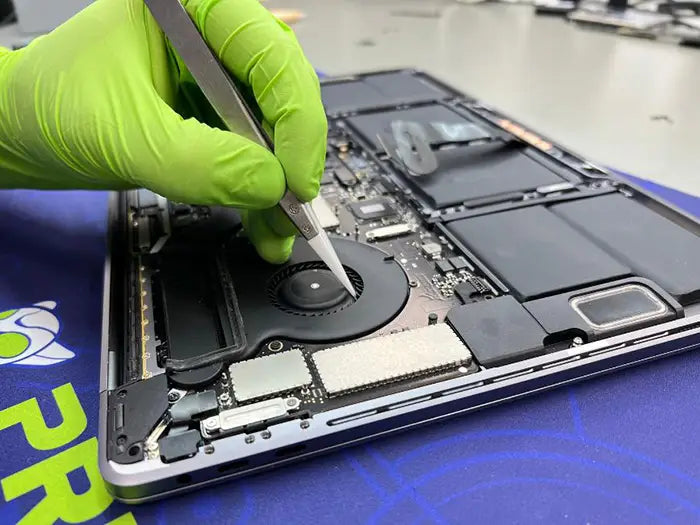
After disassembly, the MacBook showed visible wear near the hinge-area display flex cable. Additional pressure testing also revealed mild internal LCD damage that contributed to the instability.
In this case, the repair involved:
- Display assembly diagnostics
- Flex cable evaluation
- LCD damage assessment
- Internal display communication testing
Because the issue was diagnosed before complete failure occurred, the customer avoided a more severe progression into no-backlight or full black screen behavior.
Many line-related problems eventually overlap with symptoms discussed in MacBook screen flickering diagnostics, especially when the instability begins affecting image synchronization and brightness control.
Can You Fix MacBook Screen Lines Yourself?
Some basic troubleshooting steps are safe to perform at home, especially when trying to determine whether the problem is related to software behavior or physical hardware failure. However, modern MacBook display systems are extremely delicate internally, and improper DIY repair attempts often create additional damage.
Safe Tests You Can Perform
Before opening the MacBook or replacing parts, several simple tests may help narrow down the issue safely.
Test an External Monitor
Connecting the MacBook to an external display helps determine whether the graphics system is functioning properly.
- If the external monitor looks normal, the issue is more likely inside the display assembly.
- If the external monitor also shows lines or artifacts, the logic board or GPU may be involved.
Check for Lid Movement Reactions
Slowly adjusting the lid angle can sometimes reveal flex cable instability. If the lines worsen, disappear, or flicker during movement, the display cable becomes a likely suspect.
Boot Into Safe Mode
Safe Mode testing can help isolate temporary software conflicts or graphics rendering issues. If the symptoms disappear completely in Safe Mode, software becomes a more likely cause.
Avoid Applying Pressure to the Display
Pressing directly on the screen or forcing the lid into specific angles can worsen internal LCD damage and accelerate display cable failure.
Why DIY Repairs Often Become Risky
MacBook display assemblies are highly integrated and difficult to service safely without specialized tools and experience.
Improper repair attempts may damage:
- Display flex cables
- Backlight circuitry
- Logic board display connectors
- LCD panel layers
- Internal display calibration systems
Battery disconnection mistakes during screen replacement can also short sensitive display circuits and create additional board-level failures.
Cheap Aftermarket Screens Can Create New Problems
Low-quality replacement displays sometimes introduce additional symptoms that were not present originally.
Common aftermarket display issues include:
- Brightness inconsistency
- Image ghosting
- Color calibration problems
- Intermittent flickering
- Poor cable durability
Because of this, proper diagnostics before replacement remain extremely important.
Apple also recommends professional service evaluation for persistent hardware-related display problems through its official Mac repair support resources.
Repair Options for MacBook Screen Line Problems
The correct repair approach depends entirely on identifying which component is actually failing. Screen lines may originate from the LCD panel, display flex cable, graphics circuitry, backlight communication, or logic board display paths.
Because these systems are interconnected, professional diagnostics are usually necessary before replacing expensive components unnecessarily.
Display Assembly Replacement
If the LCD panel itself is physically damaged, replacing the display assembly may become the most reliable solution.
Display replacement is commonly required when technicians confirm:
- Internal LCD cracking
- Permanent vertical or horizontal lines
- Pressure damage
- Severe image distortion
- Panel communication failure
Modern Retina display assemblies are highly integrated, which means multiple screen components are replaced together as a complete unit.
Display Cable and Flexgate Repair
If the lines react to lid movement or hinge position, the issue may involve the display flex cable rather than the LCD itself.
Some systems affected by Flexgate-related cable wear can be repaired without replacing unrelated components unnecessarily.
Related failure patterns are explained further in MacBook Flexgate display cable repair diagnostics.
Why Early Diagnosis Helps
Intermittent display line problems may begin as minor instability before eventually progressing into severe flickering, dimness, or complete black screen behavior.
Logic Board and GPU Repair
When both the internal display and external monitor show artifacts or instability, technicians may investigate graphics-related logic board failure.
Potential board-level repairs include:
- Display communication repair
- GPU signal diagnostics
- Backlight rail stabilization
- Connector-level repair
- Corrosion cleanup after liquid exposure
These repairs require specialized equipment including microscopes, board schematics, and precision soldering tools.
Protecting Your Data During Display Failure
Some MacBooks with display instability eventually develop more severe startup or logic board failures. If important data is stored on the system, protecting the data before additional failures occur becomes increasingly important.
Users experiencing severe instability, black screens, or startup problems may also benefit from reviewing MacBook data recovery options.
Need Professional MacBook Screen Diagnostics?
Whether the issue involves vertical lines, LCD damage, Flexgate cable wear, or graphics instability, professional diagnostics help identify the real failure before unnecessary parts are replaced.
Schedule a MacBook Screen DiagnosticConclusion
MacBook screen lines can originate from both software and hardware failures, which is why accurate diagnostics matter before replacing expensive components.
Some problems involve temporary graphics rendering instability, while others are caused by:
- LCD panel damage
- Display flex cable wear
- Flexgate-related failures
- Backlight instability
- Logic board graphics circuitry
- Liquid damage corrosion
In many situations, early intermittent lines eventually progress into severe flickering, dim screens, or complete black screen failures if the underlying hardware problem continues worsening.
Additional MacBook display repair resources include:
Share this
Related Mac Repair Articles


MacBook Screen Lines? Causes & Repair Guide Frequently Asked Questions
Why does my MacBook have vertical lines on the screen?
Can MacBook screen lines be caused by software?
Why do the screen lines change when I move the lid?
Can liquid damage cause screen lines on a MacBook?
Do screen lines always mean the display must be replaced?
Why does my MacBook show screen lines while the external monitor works normally?
Can MacBook screen lines get worse over time?
MacBook Not Working? Get Expert Diagnosis and Repair Options
If your MacBook is experiencing issues, getting a proper diagnosis is the first step. Many problems that seem like major failures can often be resolved with targeted component-level repairs.
At Prime Tech Support, we specialize in advanced MacBook diagnostics and repairs, including issues that other shops may not be able to resolve.
In Miami? Get Local Mac Repair Service
Our team is ready to help you . We offer same-day repairs
Not in Miami? Use Our Mac Mail-In Repair Service
We offer secure nationwide mail-in repairs with fast turnaround times and professional diagnostics.
Explore More MacBook Repair Guides
View all-

A MacBook SSD upgrade is possible on certain older MacBook Pro and MacBook Air models, but newer models use storage...
MacBook SSD Upgrade: Can Your Model Be Upgraded—and Is It Wort...
A MacBook SSD upgrade is possible on certain older MacBook Pro and MacBook Air models, but newer models use storage...
-

MacBook storage problems can involve much more than a failed SSD. Learn how removable and soldered MacBook storage works, common...
MacBook SSD Repair and Upgrade: Complete Guide to Storage Prob...
MacBook storage problems can involve much more than a failed SSD. Learn how removable and soldered MacBook storage works, common...
-

Is your MacBook running hot but the fan is completely silent? Learn how to determine whether your MacBook has a...
MacBook Fan Not Working Diagnostics and Repair
Is your MacBook running hot but the fan is completely silent? Learn how to determine whether your MacBook has a...


